Complete Comparison — Silica Gel vs. Clay vs. Calcium Chloride: Science, Performance, Cost & Industry Fit
Comprehensive technical comparison of the three most-used desiccants: Silica Gel (SiO₂·nH₂O, BET 600–800 m²/g), Clay Bentonite (montmorillonite interlayer intercalation) and Calcium Chloride (CaCl₂ deliquescence 200–300%). 15 criteria, TCO for 5 export industries, 7-step decision tree — data from CE
TL;DR — Make Your Decision in 3 Minutes
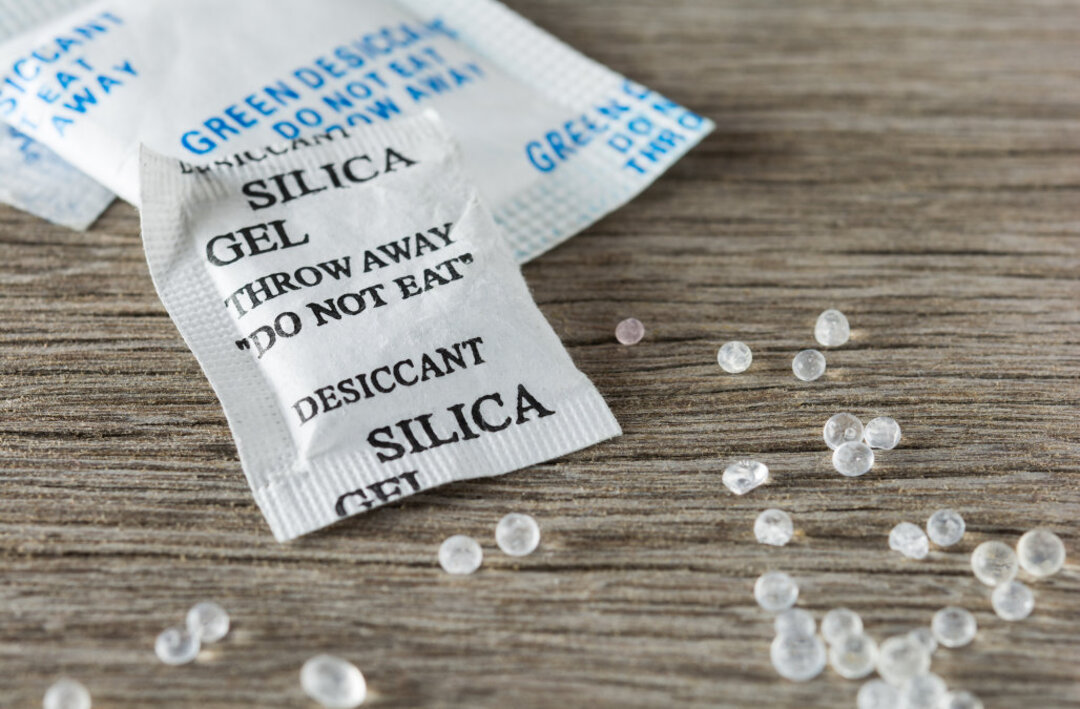
Silica gel, clay (bentonite/montmorillonite) and calcium chloride (CaCl₂) are the three most widely used desiccants in Vietnamese export logistics. They all absorb moisture, but through entirely different mechanisms, with very different performance profiles across humidity ranges, temperatures, and shipment durations.
This flagship comparison covers 15 technical criteria, RH × temperature × time performance data, total cost of ownership (TCO) for five export industries, and a 7-step decision tree so you select the right desiccant the first time. All data is drawn from CEMACO Saigon's 10+ years of desiccant supply experience — ISO 9001 + HACCP certified manufacturer in Ho Chi Minh City.
- Direct food/pharma contact, reusability required: White Silica Gel Type A.
- 40ft container >45 days, target RH <60%, low budget: CaCl₂ hanging strips.
- Short container ≤30 days, RH 40–70%, cost priority: Clay bentonite.
- Electronics, PCB, IC — zero liquid leakage tolerance: Silica Gel or Clay (NEVER CaCl₂).
- EU market, REACH-compliant, no cobalt: White Silica Gel or Clay.
1. Overview of Three Desiccants — The Science Behind Each
Understanding why these three materials behave differently is the foundation for making the right selection. The difference lies in the adsorption mechanism at the molecular level — and this determines every practical advantage and limitation in the field.
1.1 Silica Gel — Physical Adsorption via Capillary Condensation
Silica gel has the chemical formula SiO₂·nH₂O — amorphous silicon dioxide synthesized from sodium silicate and sulfuric acid. Its internal structure is a network of mesopores (2–50 nm diameter) with a BET surface area of 600–800 m²/g — ten to fifteen times greater than clay bentonite.
The adsorption mechanism is physisorption combined with capillary condensation: water molecules are attracted into mesopore walls by Van der Waals forces (no chemical bonding), then condense into liquid inside pores at RH above 40% due to the Kelvin effect lowering the local saturation vapor pressure. No chemical reaction occurs — which is why silica gel is safe for food contact and can be fully regenerated by heating. Maximum absorption: approximately 37–40% of its own weight at RH 100%. See: Silica Gel Complete Guide 2026 (Flagship F1). Reference: FDA 21 CFR 184.1711 — Silicon Dioxide GRAS.
1.2 Clay (Bentonite/Montmorillonite) — Interlayer Physisorption
Clay desiccant is made from bentonite — a natural smectite clay mineral, predominantly montmorillonite (approximate formula (Na,Ca)₀.₃₃(Al,Mg)₂Si₄O₁₀(OH)₂·nH₂O). The 2:1 tetrahedral–octahedral–tetrahedral layer structure creates expandable interlayer space that accommodates water molecules.
Clay's BET surface area ranges 50–150 m²/g — five to ten times lower than silica gel — but total moisture capacity still reaches 30–35% of its weight at RH 70–90% via intercalation. Like silica gel, the mechanism is purely physical — clay can be regenerated at 110–150°C. Clay performs stably in the 30–80% RH range at 10–50°C, making it ideal for short-haul containers in tropical climates. See: Silica Gel vs. Clay Desiccant Comparison.
1.3 Calcium Chloride (CaCl₂) — Chemical Adsorption via Deliquescence
Calcium chloride absorbs moisture through a fundamentally different process: chemisorption combined with deliquescence. Anhydrous CaCl₂ absorbs moisture in sequential hydration stages (CaCl₂ → CaCl₂·H₂O → CaCl₂·2H₂O → CaCl₂·4H₂O → CaCl₂·6H₂O), each releasing heat (hydration enthalpy 58–70 kJ/mol). Above its deliquescence point (RH 29% at 25°C), the salt converts to a saturated liquid solution and continues to absorb moisture as a liquid — reaching 200–300% of its own weight, far beyond silica gel or clay.
Key limitations: not regenerable (chemical reactions are irreversible under practical conditions), and when saturated produces a highly corrosive CaCl₂ solution that rapidly attacks metals, damages electronics, and stains textiles. Reference: ASHRAE Fundamentals Handbook — Chapter 26. See also: Silica Gel vs. Clay vs. CaCl₂ for Containers.
1.4 Silica Gel Deep Dive — Tetrahedral Framework and IUPAC Type IV Isotherm
At the atomic scale, silica gel consists of Si–O–Si tetrahedral units cross-linked into an amorphous three-dimensional network. The internal surface is terminated by silanol groups (Si–OH) at a density of approximately 4.6 OH/nm² on fully hydroxylated surfaces — these silanol groups are the primary adsorption sites that attract water molecules via hydrogen bonding. The resulting adsorption isotherm follows IUPAC Type IV classification (mesoporous material), characterized by a hysteresis loop between adsorption and desorption branches caused by capillary condensation inside mesopores. At low RH (below 20%), monolayer adsorption dominates with minimal uptake. At RH 40–80%, multilayer adsorption and capillary condensation occur simultaneously, producing the steep isotherm slope that makes silica gel so effective in moderate-humidity environments. The energy required to regenerate (remove adsorbed water) is approximately 44 kJ/mol H₂O — close to the latent heat of water vaporization at 40.7 kJ/mol, confirming that physisorption is the dominant binding mechanism with no irreversible chemical bonds formed. Reference: IUPAC Gold Book — Adsorption Isotherm Classification. See: Silica Gel Complete Guide 2026.
1.5 Clay Bentonite Deep Dive — 2:1 Phyllosilicate, CEC, and Interlayer Spacing
Montmorillonite, the dominant mineral in bentonite clay desiccants, belongs to the smectite group of 2:1 phyllosilicates. The 2:1 designation refers to the arrangement of two silica tetrahedral sheets sandwiching one alumina octahedral sheet — a structural unit (T–O–T) approximately 9.6 Å thick when dehydrated. Exchangeable cations (Na⁺ for sodium bentonite, Ca²⁺ for calcium bentonite) occupy the interlayer space between adjacent TOT units; these cations create an electrostatic attraction for polar water molecules that drives moisture uptake. As hydration proceeds, the interlayer spacing expands from 9.6 Å (dry) to up to 15.4 Å (fully hydrated), reflecting the adsorption of complete water monolayers between clay layers. The cation exchange capacity (CEC) of montmorillonite ranges 80–150 meq/100g — one of the highest among natural clay minerals — explaining both its moisture affinity and its utility in ion-exchange and detoxification applications beyond desiccation. Sodium bentonite (Na⁺ dominant) exhibits greater swelling (higher d-spacing expansion) and superior moisture capacity compared to calcium bentonite, which is why CEMACO’s premium clay line uses sodium montmorillonite. See: Silica Gel vs. Clay Comparison · Clay Desiccant Product Range.
1.6 CaCl₂ Deep Dive — Deliquescence RH, Hydration Enthalpy, and Brine Transition
Calcium chloride stands apart from silica gel and clay because its moisture uptake is driven by thermodynamic rather than structural factors. The deliquescence relative humidity (DRH) of CaCl₂ is approximately 30% RH at 25°C — meaning that above this threshold, the salt surface spontaneously dissolves in the moisture it absorbs to form a concentrated brine solution. The sequential hydration pathway — CaCl₂ (anhydrous) → CaCl₂·H₂O → CaCl₂·2H₂O → CaCl₂·4H₂O → CaCl₂·6H₂O (brine) — releases substantial enthalpy at each step, with the overall hydration enthalpy reaching 81.3 kJ/mol H₂O for the anhydrous-to-hexahydrate transition. This exothermic process is a critical engineering concern: in a poorly ventilated container, the heat generated by a large CaCl₂ load (e.g., 20 kg in a 40ft container) can raise ambient temperature by 1–3°C, potentially increasing moisture migration from warm cargo surfaces. The transition to brine phase is irreversible under practical shipping conditions, which is why CaCl₂ is strictly single-use. Practitioners must also note that the corrosive brine solution, if leaked from poorly sealed pouches, will corrode steel container frames within days and cause irreversible damage to electronic components. See: Container Hanging Desiccant Strips — Installation Guide.
2. 15-Criterion Technical Comparison Table
| Criterion | Silica Gel Type A | Clay (Bentonite) | Calcium Chloride (CaCl₂) |
|---|---|---|---|
| Adsorption mechanism | Physisorption + capillary condensation | Interlayer intercalation (physical) | Chemisorption + deliquescence (chemical) |
| Maximum capacity (% w/w) | 37–40% at RH 100%, 25°C | 25–35% at RH 90%, 25°C | 200–300% at RH 70%+, 25°C |
| Effective RH range | 20–90% (optimal 40–80%) | 30–80% (optimal 40–70%) | 29–100% (optimal 60%+) |
| Working temperature range | -40°C to +120°C (degrades above 50°C) | -20°C to +50°C (degrades above 50°C) | -20°C to +40°C (leakage risk above 30°C) |
| Regenerable? | Yes — 110–130°C, 2–3 hours, 4–8 cycles | Yes — 110–150°C, 2–4 hours, 3–6 cycles | No — chemical reactions irreversible |
| Standard packaging (CEMACO) | Non-woven, Tyvek, OPP film — 50g to 1,000g | Kraft paper, non-woven — 30g to 1,000g | Special leak-proof non-woven — 500g–1,000g strips |
| Wholesale price estimate (VND/kg, 2026) | 80,000–120,000 VND/kg | 45,000–70,000 VND/kg | 55,000–90,000 VND/kg (depends on packaging) |
| CEMACO MOQ | From 100 packets (sample order) | From 200 packets | From 50 container hanging strips |
| Standard lead time | 1–3 days (stock); 7–10 days (custom print) | 1–3 days (stock) | 2–5 days |
| FDA-grade (food/pharma) | Yes — FDA 21 CFR 184.1711 (GRAS) | Yes — FDA 21 CFR 182.2727 | FDA GRAS but NOT recommended for direct food contact due to liquid leakage |
| EU REACH-compliant | Yes (white, cobalt-free). Cobalt blue: SVHC — NOT for EU | Yes — montmorillonite not on SVHC list | Yes — CaCl₂ not on ECHA SVHC list |
| RoHS-compliant | Yes (white/orange). Cobalt blue: NOT RoHS | Yes | Yes (if free from lead/mercury contamination) |
| Color indicator option | Yes (cobalt blue or methyl violet orange) | No (typically) | No |
| Service life | 2–5 years sealed; 4–8 regeneration cycles | 2–4 years sealed; 3–6 regeneration cycles | Single-use — replace after each shipment |
| Dangerous goods transport classification | Non-hazardous — not classified by UN | Non-hazardous — not classified by UN | Non-hazardous in packaged form; bulk anhydrous may require IMO class 8 declaration |
Download full TDS/MSDS: TDS Silica Gel 2025 · TDS Clay 2025 · MSDS Silica Gel 2025 · MSDS Clay 2025.
3. Performance Across Real Conditions — RH × Temperature × Time
Adsorption isotherms are the most important technical tool for desiccant selection. This section analyses performance across three typical export scenarios from Vietnam.
3.1 Low RH (<40%) — Silica Gel Wins Decisively
At RH below 40% (cold storage, electronics, pharmaceuticals), silica gel Type A outperforms due to its high BET surface area and efficient adsorption at low vapor pressures. Clay reaches only 5–8% capacity in this range. CaCl₂ is virtually inactive below its deliquescence point of 29% RH. Only silica gel (or molecular sieve for RH <20%) is viable for tightly controlled cold-chain environments. Reference: USP <1116> — Microbiological Control Standards.
3.2 Mid-Range RH (40–70%) — All Three Compete; Clay Wins on Cost
This is the typical RH range for containers on short voyages (<30 days) from Vietnam to ASEAN or East Asia. Silica gel reaches 15–25% capacity, clay reaches 18–28% at 30–40% lower cost, and CaCl₂ is in hydration mode — effective but over-specified and uneconomical for short hauls.
Container calculation guide: How Much Desiccant for One Container? Reference: IICL Container Desiccant Guidelines.
3.3 High RH (70%+) and Long Voyages (>45 days) — CaCl₂ Dominates
Vietnam-to-Europe (35–55 days), Latin America (40–60 days), and West Africa (25–45 days) shipments regularly see in-container RH of 75–95% due to container rain and cargo outgassing. Silica gel saturates within 7–15 days, clay within 10–20 days. CaCl₂ continues absorbing via deliquescence for 45–90+ days, accumulating 200–300% of its weight — unmatched for long-haul voyages.
| Condition | Silica Gel Type A | Clay Bentonite | CaCl₂ Hanging Strip |
|---|---|---|---|
| RH 50%, 7 days | ~15% | ~12% | ~30% |
| RH 70%, 15 days | ~25% (near saturation) | ~22% (near saturation) | ~80–100% |
| RH 80%, 30 days | ~35% (saturated) | ~30% (saturated) | ~150–180% |
| RH 85%, 60 days | ~37% (saturated day 15) | ~33% (saturated day 20) | ~250–280% |
| RH 90%, 90 days | ~38% (saturated, unchanged) | ~35% (saturated, unchanged) | ~280–300% (physical limit) |
Container loading procedure: Container Rain — Anti-Condensation Handbook (Flagship F2). Download loading calculator: Container Desiccant Loading Guide PDF.
4. Total Cost of Ownership (TCO) for Five Export Industries
The packet price is not the only cost. Real TCO includes desiccant cost, regeneration cost (if applicable), cargo damage cost (from incorrect desiccant choice), and compliance cost (certifications). Below are TCO calculations for five representative Vietnamese export scenarios.
4.1 — 20ft Container, Timber Export, Vietnam to EU (35 days)
| Desiccant | Quantity | Cost (VND) | Damage risk | Total TCO |
|---|---|---|---|---|
| Silica Gel 500g hanging strips | 12 strips × 500g = 6 kg | ~720,000 VND | Medium (saturates day 20–25) | ~850,000 VND |
| Clay 1,000g hanging strips | 8 strips × 1,000g = 8 kg | ~480,000 VND | High (saturates day 15–20, voyage 35 days) | ~1,200,000 VND (incl. risk) |
| CaCl₂ 1,000g hanging strips | 6 strips × 1,000g = 6 kg | ~540,000 VND | Low (adequate for 35 days at RH 80%) | ~600,000 VND |
See: Desiccant for Timber Export · Timber Export Industry page.
4.2 — 40ft Container, Electronics PCB, Vietnam to Japan (7 days)
| Type | Quantity | Cost (VND) | Electronics risk | TCO |
|---|---|---|---|---|
| Silica Gel orange 50g/100g (JEDEC J-STD-033) | 200 packs × 50g = 10 kg | ~1,400,000 VND | Very low — no liquid, no cobalt | ~1,500,000 VND |
| Clay bentonite 50g | 200 packs × 50g = 10 kg | ~700,000 VND | Low — no liquid leakage, but no JEDEC J-STD-033 certification | ~750,000 VND |
| CaCl₂ | — | — | ABSOLUTE NO — CaCl₂ solution corrodes PCB immediately | Eliminated |
See: ESD Silica Gel for Electronics · Electronics Industry page.
4.3 — Cashew Export 40ft to EU — TCO Analysis
Cashew nuts are one of Vietnam's top export commodities to the EU, shipped in 40ft containers over 30–45 days. Cashew quality is highly sensitive to moisture: above 12% kernel moisture content, Aspergillus flavus proliferates and produces aflatoxin — a carcinogen that triggers EU border rejection under EC No 1881/2006 maximum residue level (MRL) 10 ppb. A single rejected container costs 50–80 million VND in cargo loss plus demurrage and re-testing fees, making the insurance value of correct desiccant selection enormous. The TCO analysis below compares three strategies for a 40ft cashew container (24,000 kg cargo, target hold RH ≤ 65%):
| Desiccant | Qty / Load | Material cost (VND) | Spoilage risk | Effective TCO/shipment |
|---|---|---|---|---|
| Silica Gel 500g Tyvek hanging strips | 24 strips = 12 kg | ~1,140,000 VND @ 95,000/kg | Medium — saturates day 20–25; supplement with silica gel inside inner bags | ~1,500,000 VND |
| Clay Bentonite 1,000g strips | 16 strips = 16 kg | ~1,040,000 VND @ 65,000/kg | Medium-High — clay saturates day 18–22; marginal for 40-day voyage | ~2,800,000 VND (risk-adjusted) |
| CaCl₂ 1,000g strips (leak-proof) | 8 strips = 8 kg | ~960,000 VND @ 120,000/kg | Low — adequate 45-day capacity, no liquid contact with cashew if pouches intact | ~1,050,000 VND |
| Blended: Silica Gel 6 kg + CaCl₂ 4 kg | 12 + 4 strips | ~1,050,000 VND | Very low — silica handles first 15 days, CaCl₂ covers days 15–45 | ~1,100,000 VND |
| No desiccant (baseline risk) | — | 0 VND | Very high — aflatoxin MRL breach probability ~35% for 40-day voyages in summer | ~25,000,000 VND (expected claim) |
Recommendation: blended loading (silica gel inside cashew inner packaging bags + CaCl₂ strips on container walls). See: Desiccant for Food Export · Food Industry page.
4.4 — Garments 20ft to Japan — TCO Analysis
Japanese buyers impose strict garment quality standards: zero musty odour, no moisture staining, no rust transfer from container fittings. A 20ft garment container to Japan (7–12 days voyage) carries approximately 10,000–15,000 units worth 300–800 million VND retail. The main moisture risk is not absolute humidity but dew point fluctuation during transit through the South China Sea and East China Sea — temperature swings of 8–15°C cause container rain that wets outer cartons and triggers mould on fabric. Japanese buyers increasingly specify that desiccants contain no cobalt chloride (CoCl₂) due to EU REACH SVHC concerns — eliminating the traditional blue indicator silica gel. Orange (methyl violet) silica gel is the compliant choice.
| Desiccant | Qty | Cost (VND) | Japan buyer compliance | TCO |
|---|---|---|---|---|
| Orange Silica Gel 50g (methyl violet, cobalt-free) | 80 packets = 4 kg | ~480,000 VND | Full compliance — no CoCl₂, REACH-safe | ~550,000 VND |
| White Silica Gel 50g (food-grade) | 80 packets = 4 kg | ~440,000 VND | Full compliance — white, no indicator dye | ~480,000 VND |
| Clay Bentonite 50g | 120 packets = 6 kg | ~360,000 VND | Acceptable — no REACH conflict; lower capacity requires higher quantity | ~390,000 VND |
| Blue Silica Gel (CoCl₂ indicator) | 80 packets | ~400,000 VND | NON-COMPLIANT — cobalt chloride SVHC; Japanese buyers reject shipment | Eliminated |
| CaCl₂ strips | 2 strips = 2 kg | ~240,000 VND | Risk — brine drip can stain fabric; NOT recommended for garments direct contact | ~2,500,000 VND (risk-adjusted) |
See: Desiccant for Garments Export · Garments Industry page · Orange Silica Gel SKUs.
4.5 — Coffee Beans 40ft to North America — TCO Analysis
Vietnam is the world's second-largest coffee exporter by volume; approximately 40% of exports go to North America. Green coffee beans are typically shipped in 40ft containers (18,000–20,000 kg) over 25–35 days. The critical moisture window is narrow: 10.5–12.5% bean moisture content (MCB). Below 10.5%, the beans become brittle and cup quality drops. Above 12.5%, mould (Aspergillus, Fusarium) develops and cup quality deteriorates irreversibly. In-container dew point management is therefore the primary technical objective — not simply reducing RH, but preventing RH surges during day-night thermal cycling that cause surface condensation on burlap sacks. CaCl₂ presents a specific risk for coffee: the corrosive brine can wick through burlap sack weave and contaminate the outer bean layer with CaCl₂ residue, detectable in cupping tests as an atypical mineral off-note. Silica gel inside secondary cardboard liner boxes is the industry-recommended primary protection, with CaCl₂ strips acceptable only on container walls at least 30 cm from sack surfaces.
| Desiccant | Qty | Cost (VND) | Coffee quality risk | TCO |
|---|---|---|---|---|
| Silica Gel 500g Tyvek strips (inside cartons) | 28 strips = 14 kg | ~1,330,000 VND @ 95,000/kg | Low — proven for 30-day voyages with daily RH cycling | ~1,500,000 VND |
| Clay 1,000g strips | 14 strips = 14 kg | ~910,000 VND @ 65,000/kg | Medium — adequate for 25-day voyages; marginal for 35 days in high-RH season | ~1,800,000 VND (risk-adjusted) |
| CaCl₂ strips (wall-mounted only) | 8 strips = 8 kg | ~960,000 VND @ 120,000/kg | Medium — brine drip risk onto burlap; requires 30 cm clearance from sacks | ~1,200,000 VND |
| Blended: Silica Gel 10 kg + CaCl₂ 4 kg | 20 + 4 strips | ~1,430,000 VND | Very low — optimal for 35-day voyages with high-RH departure port | ~1,500,000 VND |
| No desiccant (burlap only) | — | 0 VND | Very high — mould risk 40–60% for 35-day voyages departing July–September | ~30,000,000 VND (expected) |
See: Desiccant for Agricultural Products · Container Rain Handbook (Flagship F2) · Request TCO Analysis for Your Coffee Shipment.
5. Seven-Step Decision Tree — Select the Right Type the First Time
This decision tree condenses CEMACO's 10+ years of field experience into seven binary questions. Each question eliminates at least one desiccant type or defines the optimal specification. Work through all seven questions in order — do not skip to Q6 (budget) without first resolving Q1 through Q5, as budget optimization is meaningless if the technically correct desiccant has already been eliminated.
Question 1: Does cargo have direct food or pharmaceutical contact?
→ Yes: Only white Silica Gel Type A (FDA GRAS) or food-grade Clay. CaCl₂ eliminated.
→ No: Proceed to Q2.
Why this question matters: food safety regulations in the EU (EC 1935/2004), USA (FDA 21 CFR), and Vietnam (QCVN) require that any material in direct contact with food or food packaging has demonstrated food-grade safety. CaCl₂ is disqualified not because of inherent toxicity but because its deliquescence mechanism produces a brine liquid that can migrate into food products. Silica gel (FDA GRAS, 21 CFR 184.1711) and food-grade clay (FDA 21 CFR 182.2727) are the only options. If you answered Yes, your desiccant selection is complete: source white silica gel with food-grade Declaration of Compliance from your supplier. Contact CEMACO: Food-Grade Desiccant Quote.
Question 2: How long is the voyage?
→ ≤20 days: Clay or Silica Gel adequate. Proceed to Q6 (budget).
→ 21–45 days: Increase Silica Gel quantity or consider CaCl₂. Proceed to Q3.
→ >45 days: CaCl₂ is the priority unless cargo is electronics (Q3).
Why this question matters: voyage duration is the single most important factor in desiccant selection because it determines total moisture exposure over time. Silica gel and clay have finite capacities of 30–37% w/w — they saturate and become inert. For a 20-day voyage at RH 65%, 8 kg of clay per 20ft container is adequate. For a 45-day voyage at RH 80%, the same 8 kg saturates at day 15 and provides zero protection for the remaining 30 days. CaCl₂'s liquid-phase deliquescence mechanism provides unlimited practical duration (limited only by pouch physical volume), making it the only viable single-desiccant solution for voyages exceeding 45 days in tropical-humidity environments. See: Container Rain Handbook (Flagship F2).
Question 3: Is cargo electronics, sensitive metals, or components?
→ Yes: Eliminate CaCl₂ entirely — use Silica Gel or Clay only. Proceed to Q5.
→ No: CaCl₂ is viable. Proceed to Q4.
Why this question matters: CaCl₂ deliquescence produces a conductive brine solution (calcium chloride in water, conductivity 50–100 mS/cm at saturation). Even micro-droplets of this brine on copper PCB traces accelerate electrochemical corrosion (galvanic action) within hours. For a 40ft container of mixed electronics cargo valued at 1–5 billion VND, a single CaCl₂ pouch failure is a total loss event. This is not a risk — it is an engineering certainty under pouch failure conditions. The question is binary: electronics present means CaCl₂ is absolutely excluded, regardless of voyage duration or cost pressure. See: ESD Silica Gel for Electronics.
Question 4: What is the target RH to maintain?
→ Target RH <40%: Only Silica Gel (or Molecular Sieve for <20%).
→ Target RH 40–70%: Clay or Silica Gel both suitable. Proceed to Q6.
→ Target RH >70% (reduction only, not tight control): CaCl₂ is best.
Why this question matters: the target RH determines which desiccant's adsorption isotherm is in its high-efficiency zone. Silica gel with its Type IV IUPAC isotherm achieves maximum adsorption efficiency in the 20–60% RH range — it actively pulls moisture down to low levels that clay and CaCl₂ cannot reach. Clay operates efficiently in the 35–75% RH band. CaCl₂ is a bulk moisture absorber optimized for high-humidity reduction (75–95% RH) but cannot control to precise low-RH targets. If your cargo specification says "maintain RH below 40%" (e.g., pharmaceutical stability studies, precision instruments), only silica gel or molecular sieve can achieve this. The indicator option in silica gel (orange methyl violet type) provides visual confirmation that RH has been maintained below 33% throughout the shipment — a key feature for pharmaceutical and medical device export documentation. See: Orange Indicator Silica Gel SKUs.
Question 5: Do you need to reuse the desiccant?
→ Yes: Only Silica Gel or Clay — both regenerable 3–8 times.
→ No: All three are viable — proceed to Q6.
Why this question matters: regeneration economics are significant for companies running regular export schedules. Silica gel regenerates 4–8 times at 110–130°C (2–3 hours in a standard industrial oven, energy cost approximately 15,000–25,000 VND per cycle per kg). Clay regenerates 3–6 times at 110–150°C. CaCl₂ cannot be regenerated — all absorbed moisture is chemically bound in hydrate salts and ultimately in liquid brine. A company shipping 4 containers per month that switches from CaCl₂ to silica gel with in-house regeneration can reduce desiccant costs by 60–75% over 12 months, at the cost of a commercial desiccant oven (typically 15–25 million VND capital investment). CEMACO can advise on regeneration equipment sizing. See: Regeneration Program Inquiry.
Question 6: Maximum desiccant budget per container?
→ <500,000 VND/20ft: Clay is the only economically viable option for voyages ≤25 days.
→ 500,000–1,000,000 VND: Clay or CaCl₂ depending on voyage duration.
→ >1,000,000 VND: Silica Gel or blended Silica + CaCl₂.
Why this question matters: budget is the final filter after all technical requirements have been satisfied. At the <500,000 VND level for a 20ft container on a 20-day voyage, clay bentonite (8 kg × 55,000 VND/kg = 440,000 VND) is the only complete solution. Silica gel at the same quantity (8 kg × 95,000 VND/kg = 760,000 VND) exceeds budget. However, for companies that factor cargo damage insurance into their logistics cost model, the 320,000 VND difference is often recovered in the first prevented moisture damage event — which can range from 2 million VND (one carton of garments) to 50+ million VND (a pallet of premium electronics). The business case for silica gel becomes compelling at cargo values above 50 million VND per container. See: Silica Gel vs. Clay Cost Analysis · Get a Volume-Priced Quote.
Question 7: Does the export market require EU REACH compliance?
→ Yes (EU, Japan, South Korea): Use cobalt-free Silica Gel or Clay Bentonite. Verify at ECHA Candidate List of SVHCs.
→ No: All types are acceptable (subject to conditions above).
Why this question matters: EU REACH Regulation (EC No 1907/2006) restricts Substances of Very High Concern (SVHC) in articles placed on the EU market. Cobalt dichloride (CoCl₂) — used as the moisture indicator in traditional blue silica gel — was added to the SVHC Candidate List in 2008 and requires authorization for consumer-facing applications in the EU as of 2020. While industrial silica gel supplied to EU manufacturers is currently not subject to authorization, EU buyers increasingly request cobalt-free silica gel in their supplier specifications to avoid future regulatory risk. Japan's chemical regulations (Chemical Substances Control Law, CSCL) and South Korea's K-REACH maintain similar restrictions. The practical guidance: any order destined for EU, Japan, or South Korea should default to white silica gel (no indicator) or orange methyl violet silica gel (cobalt-free indicator). CEMACO maintains EU-compliant stock of both variants. See: CEMACO Compliance Certifications · Download REACH Declaration of Compliance.
Calculate exact quantities: Container Desiccant Loading Calculator and How to Choose Container Desiccant.
6. When NOT to Choose Each Desiccant — Critical Exclusion Rules
6.1 Silica Gel — Avoid for RH > 80% Sustained 60+ Days
- Voyage >45 days + in-container RH >75% — silica gel saturates within 15–25 days and becomes inert. Use CaCl₂ or a blended approach.
- Very low budget and cargo quality allows clay — clay is 30–40% cheaper and adequate for short regional voyages.
- Extremely high total moisture load in a small space — silica gel requires 5–8× more mass than CaCl₂ for equivalent total moisture uptake.
The fundamental engineering reason is silica gel's finite adsorption capacity ceiling. At RH 80% and 25°C, Type A silica gel reaches approximately 30–35% w/w capacity — after which every additional gram of atmospheric moisture passes through the desiccant bed unabsorbed. For a 60-day voyage from Ho Chi Minh City to Rotterdam where in-container RH may sustain 80–90% for 35–45 days, silica gel simply exhausts its capacity at the critical early phase of the voyage and provides no protection for the remaining 25–35 days. The solution is either to massively over-specify silica gel (increasing load by 3–4× at significant cost) or to switch to CaCl₂ which continues absorbing via deliquescence indefinitely until the pouch physically fills with brine. For mixed-sensitivity cargo (e.g., garments plus electronics in separate compartments), a blended approach with CaCl₂ strips on container walls and silica gel inside electronics packaging boxes is the technically correct and commercially optimized approach. See: Silica Gel vs. Clay Comparison · Powder Desiccant Range for High-Load Applications.
6.2 Clay — Avoid for High-Value Electronics and Pharma Controlled Environments
- RH below 30% — clay bentonite barely adsorbs below this threshold; useless for cold chain or pharmaceutical controlled environments.
- Temperature >50°C (Middle East summer routes, sun-exposed containers) — clay loses water retention and may release absorbed moisture.
- JEDEC J-STD-033 compliance for high-value electronics — clay has no JEDEC certification and cannot control MSL-sensitive components.
- Voyage >30 days at RH >70% solo — total capacity insufficient; combine with CaCl₂ or switch entirely.
Clay's limitation for electronics applications stems from two distinct engineering concerns. First, the BET surface area of commercial clay bentonite (50–150 m²/g) is 4–12× lower than silica gel (600–800 m²/g), meaning clay cannot achieve the ultra-low RH levels (below 10% RH) required inside Moisture Barrier Bags (MBB) per JEDEC J-STD-033 for MSL Level 3+ components. Second, clay particles — particularly lower-grade commercial bentonite with particle size distribution extending below 10 µm — can shed fine dust that contaminates sensitive PCB contact surfaces and potentiometer tracks. While premium-grade montmorillonite clay has reduced dust-shed risk, no Vietnamese clay supplier currently holds JEDEC J-STD-033 third-party certification, making silica gel the only commercially validated choice for electronics export from Vietnam. For pharmaceutical applications requiring RH < 25% in blister packaging or vial storage, clay is similarly disqualified. See: ESD Silica Gel for Electronics · Electronics Industry page.
6.3 CaCl₂ — Avoid for Direct Electronics, ESD-Sensitive Cargo, and EU Food Contact
- Electronics, PCB, IC, sensitive metal components — even a small CaCl₂ solution leak is catastrophic for circuit boards.
- Direct food contact cargo — liquid CaCl₂ leakage in a food container creates a HACCP critical failure.
- Multiple reuse cycles required — CaCl₂ is single-use with zero regeneration ROI.
- Poorly ventilated sealed environments — a ruptured CaCl₂ bag raises local RH and counteracts the desiccation goal.
The three critical exclusion scenarios for CaCl₂ are electronics, direct food contact, and EU regulatory compliance. For electronics: CaCl₂ brine (a concentrated calcium chloride solution, conductivity 50–100 mS/cm) is highly corrosive to copper traces, solder joints, and aluminum heat sinks. A single pouch failure releasing 100–200 mL of brine onto a pallet of PCBs can cause total cargo loss. The failure probability of industrial-grade CaCl₂ pouches after 30+ days at high humidity is non-zero and not acceptable for electronics shipments. For EU food contact: CaCl₂ is not permitted for direct food contact packaging under EU Regulation EC 1935/2004, which requires positive list approval for all materials intended to contact food directly — CaCl₂ sachets are NOT on the approved positive list for direct contact. Indirect use (container-level moisture control, not inside food packaging) is permitted, but the risk of accidental brine contamination makes it unacceptable for loose food products. For ESD-sensitive cargo: the ionic content of CaCl₂ brine dramatically increases surface conductivity, potentially compromising ESD protection even without catastrophic leakage. See: CEMACO ISO 9001 + HACCP Certifications · Request a Compliant Desiccant Quote.
7. FAQ — Frequently Asked Questions on Desiccant Comparison
1. Can Silica Gel and CaCl₂ be mixed in the same container?
Yes, and it is actually recommended for medium-long voyages (30–60 days) with moderately sensitive cargo. Silica gel performs in the first 15 days at lower RH; CaCl₂ takes over as humidity rises. Keep them physically separate — CaCl₂ strips high on container walls, silica gel packets inside cargo boxes. Never let the two materials contact each other.
2. What is the ROI of silica gel regeneration vs. buying new CaCl₂ each shipment?
For voyages of 20–30 days, silica gel regeneration ROI is 3–5× compared to single-use CaCl₂. Example: 12 × 500g silica gel strips (720,000 VND) regenerated 6 times = effective cost of 120,000 VND per shipment, versus CaCl₂ 6 × 1 kg strips × 6 shipments = 3,240,000 VND. For voyages over 40 days, CaCl₂'s unmatched total capacity reverses the ROI equation.
3. Does EU REACH ban any type of desiccant?
EU REACH (EC No 1907/2006) does not directly ban desiccants, but lists cobalt chloride (used in blue silica gel indicator) as a Substance of Very High Concern (SVHC), requiring Authorization for consumer product use in the EU since 2020. White silica gel (cobalt-free), clay bentonite, and CaCl₂ are all absent from the SVHC list. Verify at ECHA Candidate List.
4. Which desiccant meets JEDEC J-STD-033 for electronics?
JEDEC J-STD-033 requires desiccant to control RH inside a Moisture Barrier Bag below 10%. White Silica Gel Type A and molecular sieve meet this standard. Clay does not achieve the required low RH. CaCl₂ must never be used with electronics — liquid leakage is immediately catastrophic.
5. Is blended desiccant loading technically complex?
Not if the voyage timeline is properly analysed. Rule: fast-saturating desiccant (silica gel, clay) goes inside cargo boxes (primary packaging level); high-capacity long-duration desiccant (CaCl₂ hanging strips) goes in the container space. Never let CaCl₂ contact electronics or premium textiles. Contact CEMACO for a free blended loading calculation for your specific cargo: hotline 0983 929 232.
6. What is the practical difference between standard clay and premium montmorillonite clay?
Standard commercial clay is often calcium bentonite with lower capacity and more impurities. Premium montmorillonite clay (sodium bentonite) has more uniform layer structure, 15–20% higher capacity, and sufficient purity for food and pharmaceutical use. CEMACO supplies Clay Montmorillonite 30g Kraft meeting FDA 21 CFR 182.2727.
7. Does CaCl₂ damage wooden pallets or container walls?
When saturated and leaking, CaCl₂ solution causes mild wood discoloration and accelerated decay, and strongly corrodes steel container walls. Hanging strips must be positioned correctly (not touching container sides) and use high-quality leak-proof pouches. See installation guide: Container Hanging Desiccant Strips.
8. Which desiccant has the most complete HACCP certification?
White Silica Gel Type A has the most complete HACCP certification when sourced from a certified supplier such as CEMACO Saigon (ISO 9001 + HACCP). Food-grade bentonite clay also qualifies but fewer Vietnamese suppliers hold full certification. CaCl₂ is incompatible with HACCP in food environments due to liquid leakage risk. See: HACCP Certification for Desiccants.
9. How do I calculate blended desiccant loading (silica gel + clay) for a 40ft container?
The blended loading formula starts with calculating the total moisture uptake required: estimate the moisture load as the product of container internal volume (approximately 67 m³ for a 40ft), the target RH reduction (ΔRH expressed as g H₂O/m³ at operating temperature), and voyage duration in days. Divide by the weighted average capacity of your blend. For a 60/40 silica gel to clay blend by weight, the effective blended capacity is approximately (0.6 × 30%) + (0.4 × 25%) = 28% w/w at RH 70%. Apply a safety factor of 1.5–2.0× to account for RH spikes during container loading and unloading, thermal cycling day-night, and any cargo outgassing. The practical rule: minimum 8–12 kg desiccant per 20ft container, 15–20 kg per 40ft for voyages ≤30 days at RH 60–75%. Contact CEMACO for a free blended loading calculation specific to your cargo and route: Request Blended Loading Calculation · Container Desiccant Loading Calculator.
10. What is the ROI break-even point for switching from clay to silica gel?
The ROI break-even analysis depends on three variables: voyage duration, in-container RH, and cargo value. For short-haul routes (≤20 days, RH 50–65%, ASEAN/East Asia), clay is cost-optimal and silica gel regeneration does not justify the premium — the break-even for switching to silica gel under these conditions is approximately 36 months of consistent shipments. For medium-haul routes (21–40 days, RH 65–80%, Middle East/India), silica gel regeneration break-even is approximately 18 months: the 30–40% higher per-kg price is offset by 4–8× reuse cycles versus single-use clay, and by reduced cargo damage claims. For high-value cargo (electronics, pharmaceuticals, premium textiles) regardless of voyage duration, silica gel's break-even is immediate — a single prevented cargo damage claim typically exceeds 12 months of desiccant cost differential. See: Silica Gel vs. Clay Cost Analysis.
11. Which desiccant satisfies EU EC 1935/2004 for food-contact wrapping?
EU Regulation EC 1935/2004 establishes the framework for materials and articles intended to contact food. White Silica Gel Type A (silicon dioxide) is classified as GRAS (Generally Recognized as Safe) under FDA 21 CFR 184.1711 and is also approved under EC 1935/2004 for indirect food contact when used as a desiccant sachet inside food packaging — the silicon dioxide does not migrate into food at detectable levels under normal use conditions. Clay bentonite (montmorillonite) is acceptable for indirect food contact with a Declaration of Compliance (DoC) from the supplier confirming migration levels comply with the 10 mg/dm² overall migration limit. Calcium chloride (CaCl₂) sachets are NOT permitted for direct food contact under EC 1935/2004 because CaCl₂ is not on the positive list for direct food contact materials, and the brine solution produced by deliquescence would constitute direct food contamination if pouch integrity fails. CEMACO's silica gel and clay products ship with a Declaration of Compliance available on request: Download Compliance Documents · View Certifications.
12. Can I mix CaCl₂ in the same container as an electronics shipment?
No. Mixing CaCl₂ hanging strips in the same container as electronics — even if the electronics are individually packaged in Moisture Barrier Bags (MBB) — violates JEDEC J-STD-033 best practices and creates unacceptable corrosion risk. The standard requires that the internal environment of each MBB be controlled to below 10% RH using silica gel or molecular sieve; placing CaCl₂ strips in the ambient container space does not meet this specification because MBB integrity is finite — any pinhole or seal defect allows CaCl₂-saturated humid air to enter the bag. More critically, if any CaCl₂ pouch fails and releases brine into the container, the resulting corrosive aerosol will penetrate outer cartons and potentially reach component packaging. For electronics cargo, the protocol is: silica gel Type A inside every MBB (per JEDEC J-STD-033 Table 4), silica gel or clay packets in secondary packaging, and zero CaCl₂ in the container. See: ESD Silica Gel for Electronics Export · Electronics Industry — Desiccant Requirements.
8. Final Summary Table — Select by Industry
| Industry / Scenario | Primary recommendation | Alternative | Excluded |
|---|---|---|---|
| Timber container to EU/USA (35–55 days) | CaCl₂ hanging strips 1,000g | Silica Gel 500g ≥15 strips/20ft | Clay (insufficient capacity) |
| Packaged food, pharmaceuticals | White Silica Gel Type A food-grade | Montmorillonite Clay food-grade | CaCl₂ (liquid leakage risk) |
| Electronics, PCB, IC, components | Orange Silica Gel (cobalt-free) | Clay (<20 days, non-JEDEC) | CaCl₂ (PCB corrosion) |
| Agricultural products ≤30-day voyages | Clay or Silica Gel | Food-grade Clay for food cargo | CaCl₂ (food contamination risk) |
| Garments to West Africa/Latin America (>40 days) | CaCl₂ strips (leak-proof pouches) | Silica Gel + CaCl₂ blended | Clay alone (insufficient) |
| Cold chain, medical devices (RH <30%) | Silica Gel Type A | Molecular Sieve (RH <20%) | Clay, CaCl₂ (ineffective at low RH) |
| Low budget, ≤25 days, ASEAN/East Asia | Clay Bentonite | Silica Gel (if regeneration needed) | CaCl₂ (over-spec, uneconomical) |
Get the Right Desiccant Quote for Your Shipment
CEMACO Saigon supplies all three desiccant types — Silica Gel (15 SKUs), Clay (11 SKUs), Powder Desiccant (6 SKUs) — ISO 9001 + HACCP certified, same-day delivery in Ho Chi Minh City, nationwide 1–2 days. Free technical consultation for every shipment. Call the hotline or complete the RFQ form.
Need a quote based on this article?
The CEMACOSG technical team provides free consultation on desiccant quantity tailored to your cargo, route, and export requirements.