Silica Gel — The Complete Guide 2026: Types, Sizing, Standards & Applications
The definitive 2026 guide to silica gel: seven commercial types, sizing from 1g to 1,000g across five export industries, FDA 21 CFR 184.1711 / EC 1935/2004 / HACCP / RoHS / JEDEC J-STD-033 compliance, regeneration procedures, and five criteria for selecting a reliable supplier.
TL;DR — Key Takeaways in 3 Minutes
Silica gel (SiO₂·nH₂O) is an inorganic desiccant with a surface area of 600–800 m²/g and the ability to absorb 35–40% of its own weight in moisture at RH 70–90%. This guide covers all seven commercial types, how to select the right size (1g–1,000g) by industry, compliance with FDA 21 CFR 184.1711, EC 1935/2004, HACCP, RoHS, and JEDEC J-STD-033, five export industry applications, proper regeneration procedures, and five criteria for selecting a reliable supplier.
1. What Is Silica Gel? — The Materials Science Behind the Little White Packet
Silica gel has the chemical formula SiO₂·nH₂O — amorphous silicon dioxide synthesized from sodium silicate and sulfuric acid via gel formation followed by drying. The word "gel" refers to a stage in manufacturing, not to the end-use state; the finished product is a hard, dry, odorless granule.
Moisture Absorption Mechanism — Capillary Condensation
Inside each silica gel bead is a network of mesopores (diameter 2–50 nm), creating an enormous surface area of 600–800 m²/g. Moisture uptake occurs via two mechanisms:
- Physical adsorption (physisorption): Water molecules are attracted to mesopore walls by Van der Waals forces — no chemical bonding, fully reversible upon heating.
- Capillary condensation: At relative humidity (RH) above approximately 40%, water vapor condenses into liquid within the mesopores because the Kelvin pressure inside the pore is lower than the bulk saturation pressure. This is why silica gel performs best at RH 70–90%.
Because the mechanism is entirely physical, silica gel does not react chemically with cargo, does not generate significant heat (unlike CaCl₂), and is fully regenerable by heating. This makes it the benchmark desiccant for international trade.
Silica Gel vs. Molecular Sieves and Zeolites
Molecular sieves (3A, 4A, 5A, 13X aluminosilicates) have comparable surface areas but uniform pore diameters, enabling deeper drying at very low humidity (RH <20%). However, they cost 3–5× more than silica gel and are primarily used in chemical and petrochemical industries. For general export cargo, silica gel delivers optimal cost-effectiveness. Natural zeolites (clinoptilolite) are cheaper but impure, typically failing FDA/HACCP — unsuitable for food or pharmaceutical contact.
For a head-to-head comparison with clay desiccant, see Silica Gel vs. Clay Desiccant Comparison.
Industrial Synthesis — From Sodium Silicate to the White Packet You Rely On
Commercial silica gel is produced through a multi-stage sol-gel process. The raw feedstock — sodium silicate (Na₂SiO₃), commonly called "water glass" — reacts with dilute sulfuric acid in a precisely controlled pH environment to precipitate a silicic acid hydrogel. This gel is washed extensively in deionized water to remove residual sodium sulfate salts (Na₂SO₄), a step that directly determines final purity and food-contact compliance. The washed gel is then dried at 150–180°C in rotary drum dryers, which drives off free water while preserving the mesopore architecture. A final activation step at 120–140°C for 4–6 hours removes the last bound water, leaving the dry granule with its characteristically high surface area and open pore network ready for moisture uptake. The global manufacturing footprint is concentrated in three regions: China (Hengye, Qingdao Meigao, Grace Davison Qingdao), India (Sorbead India, Fuji Silysia), and South Korea (Songwon), each competing on purity specifications, MVTR consistency, and heavy-metals compliance — criteria that Vietnamese exporters must verify by CoA for each production batch. Browse CEMACO silica gel sourced from verified factories: CEMACO Silica Gel Product Range (EN).
Silica Gel vs. Molecular Sieve vs. Activated Alumina vs. Natural Zeolite
Procurement teams frequently evaluate alternative desiccants during supply shortages or when cost pressure demands renegotiation. Molecular sieves (3A, 4A, 5A crystalline aluminosilicates) achieve deeper drying than silica gel — sustaining internal environments below RH 5% even at low ambient humidity — because their uniform crystalline cage pores (3–5 Å) selectively adsorb water molecules through size-exclusion rather than capillary condensation. This precision comes at a cost: molecular sieves are three to five times more expensive per kilogram and are reserved for pharmaceutical dry-pack, critical reagent storage, and petrochemical process streams where sub-dew-point drying is non-negotiable. Activated alumina (Al₂O₃) offers a surface area of 200–400 m²/g, handles temperatures up to 200°C without structural degradation, but performs poorly below RH 30% and is rarely specified in export cargo packaging. Natural zeolites (clinoptilolite) undercut silica gel on price but carry variable purity levels, cannot reliably satisfy the heavy-metals specifications required for FDA GRAS or HACCP food-contact compliance, and deteriorate rapidly above 50°C — disqualifying them from most regulated export applications. For the large majority of Vietnamese export scenarios — containers, packaged food, garments, timber, and electronics — silica gel remains the optimal balance of cost efficiency, adsorption performance, regulatory breadth, and domestic supply-chain reliability. For a quantitative side-by-side including CaCl₂ absorption capacity and cost-per-gram analysis, see Complete Comparison: Silica Gel vs. Clay vs. CaCl₂ (Flagship F4).
2. Seven Commercial Silica Gel Types — Choose Correctly from Day One
Not all silica gel is the same. The table below categorizes the seven major commercial types by structure, indicator chemistry, and packaging — all of which directly affect performance and regulatory compliance.
| Type | Color | Saturation indicator | Surface area (m²/g) | Typical applications | Regulatory notes |
|---|---|---|---|---|---|
| White Type A | Opaque white | None (periodic weighing) | 650–800 | Containers, wood, garments, packaged food | FDA 21 CFR 184.1711 GRAS — safe for food packaging (non-direct contact) |
| White Type B | Opaque white, larger granules | None | 400–600 | Industrial equipment, long-term storage | Same standard as Type A; slower uptake but longer retention |
| Blue Indicator (Cobalt) | Blue → pink when saturated | Cobalt chloride | 600–750 | Electrical equipment, labs, compressed air | NOT for food contact — cobalt chloride is an ECHA SVHC (ECHA REACH registry) |
| Orange Indicator | Orange → green when saturated | Methyl violet / iron oxide (cobalt-free) | 600–750 | Food, pharmaceuticals, premium electronics | Cobalt-free — meets RoHS, widely accepted in EU/US markets |
| Pellet (cylindrical) | White/Blue/Orange | Varies | 600–750 | Industrial desiccant wheels, compressed-air dryers | Rarely used in export packaging |
| Bead (spherical) | Translucent white | None | 700–800 | HPLC chromatography, sealed plastic containers, zip-bag exports | Uniform size, minimal dust — preferred for food/pharma co-pack |
| Powder | Fine white | None | 800–900 | Anti-moisture coatings, plastic additives, flavor carriers | Not used in standard packaging — see CEMACO Powder Desiccant range |
Packaging Materials — Three Primary Options
Absorption performance is heavily influenced by packaging material (moisture vapor transmission rate — MVTR):
- Non-woven fabric: High MVTR, cost-effective, most widely used. Available in white or custom-printed. Suitable for containers, wood, and garments. See Tyvek vs. Non-woven Fabric Comparison.
- DuPont Tyvek: Higher MVTR than standard non-woven; withstands harsh conditions. Required by EU and US buyers for pharmaceutical and medical-device desiccants. Price premium 20–35% over non-woven.
- OPP/Film paper: Lowest MVTR — slower but more controlled release over extended periods. Suitable for electronics and long-term warehousing.
3. Sizing Guide: 1g–1,000g — Matching Pack Weight to Cargo Volume
A common mistake is using packets that are too small or oversized, leading to either damaged cargo or unnecessary cost. The baseline rule: 1g of silica gel absorbs approximately 0.20–0.35g of water under standard conditions (25°C, RH 50%).
| Pack weight | Container (20ft/40ft) | Packaged food | Export wood | Electronics (PCB/IC) | Garments |
|---|---|---|---|---|---|
| 1g – 3g | Not suitable | Gift boxes, small zip bags ≤500g | Not suitable | MBB chip bags, SMD reels | Poly bags for shirts and underwear |
| 5g – 10g | Not suitable | Biscuit boxes, spice pouches, 200–500g tea | Not suitable | PCBs, small boxed sensors | Cartons of children's garments |
| 20g – 50g | Not suitable | Milk powder tins, dried produce boxes | Small wood crates <0.5 m³ | Mid-size electronics cartons | Large garment cartons and pallets |
| 100g – 500g | Individual cargo crates, large timber bundles | Not typical | Timber bundles 1–5 m³, pallets | Rack systems, machinery crates | Not typical |
| 500g – 1,000g (hanging strip) | Hanging strips for 20ft/40ft containers — 8–16 packets per container | Not suitable | Full-load timber containers | Not typical | High-humidity garment containers |
For a precise calculation of the number of desiccant packets required per container, refer to the MIL-D-3464E formula explained in Container Desiccant Loading Calculator.
4. Regulatory Compliance — FDA, EC, HACCP, RoHS, and JEDEC
Export cargo shipped to the US, EU, Japan, and South Korea must use desiccants that comply with destination-market regulations. Non-compliance can result in port detention, fines, or loss of long-term contracts.
FDA 21 CFR 184.1711 — US Market
Under FDA 21 CFR 184.1711, silicon dioxide (silica gel) is classified as Generally Recognized as Safe (GRAS) for use as an anti-caking agent and desiccant in packaged foods. Condition: the silica gel must achieve ≥99% SiO₂ purity, and cobalt-containing indicator types are explicitly excluded from food-contact applications.
EC 1935/2004 — EU Market
EC No 1935/2004 requires that all food-contact materials (including desiccant packets placed inside food packaging) must not transfer harmful substances to food at levels that could endanger human health. White Type A silica gel with no hazardous indicators complies with this requirement. See EC 1935/2004 Analysis for Food Desiccants.
HACCP — Food Industry
HACCP frameworks require desiccants used in food processing and packaging to be controlled as an input material with documented CoA, MSDS, and traceability by batch number. CEMACO provides complete technical documentation for every shipment — download the TDS and HACCP Certificate 2025. More: HACCP Certification for Desiccant Packets.
JEDEC J-STD-033 — Electronics Industry
JEDEC J-STD-033 governs packaging, transport, and storage of moisture-sensitive devices (MSDs). Silica gel in MBB pouches must maintain the internal environment at RH <5% for storage periods of up to 12 months, with desiccant capacity sized per J-STD-033 Annex B. See ESD Silica Gel for Electronics.
RoHS — Hazardous Substance Restrictions
RoHS Directives 2 and 3 (EU 2011/65/EU and 2015/863/EU) restrict cobalt, lead, mercury, and cadmium in electrical and electronic equipment. Blue-indicator silica gel containing cobalt chloride violates RoHS when packed with electronics exported to the EU. CEMACO recommends orange-indicator (cobalt-free) silica gel for all electronics shipments.
5. Five Export Industry Applications
5.1 Container Shipping — Fighting Container Rain
Container rain is condensation that forms on the container ceiling and drips onto cargo when the container wall temperature fluctuates significantly during long sea voyages. It is the leading cause of moisture damage to exported goods. For a full explanation of the mechanism, see What Is Container Rain? and the companion flagship article Complete Guide to Container Condensation Prevention (Flagship F2).
Solution: 500g–1,000g hanging-strip silica gel — 2 strips per 20ft container, 4 strips per 40ft, hung at one-third of container length from the rear doors. See Standard Container Loading Procedure for Moisture Control and Container Export Moisture Solutions.
5.2 Food Industry — Water Activity (aw) Control
For food exports, the goal is not merely removing visible moisture but maintaining water activity (aw) below microbial growth thresholds (aw <0.70 for most molds; aw <0.85 for bacteria). Food-grade silica gel (white Type A, cobalt-free, with CoA and HACCP) is the standard solution for dried produce, confectionery, dried seafood, and herbal products. See FDA-Compliant Food Desiccant Packets and Food Industry Moisture Solutions.
5.3 Wood Industry — Equilibrium Moisture Content (EMC) Control
Timber and furniture exported in containers will warp, crack, and develop mold if moisture is not controlled during the voyage. ISPM 15 heat treatment protects against pest contamination but does not protect against in-transit moisture. Silica gel 100g–1,000g placed within timber bundles combined with hanging strips in the container provides comprehensive protection. See Desiccant for Export Timber — Why It Matters and Wood Industry Moisture Solutions.
5.4 Electronics — JEDEC J-STD-033 and ESD Control
Moisture-sensitive devices are classified from Level 1 (unlimited floor life) to Level 6 (must be soldered within 6 hours of opening the MBB). Silica gel inside MBBs must be sized per the J-STD-033 Annex B table, and in electronics environments the desiccant packet must also be ESD-safe to prevent electrostatic discharge from damaging components. See ESD Silica Gel for Electronics and Electronics Moisture Solutions.
5.4.1 MSL Classification and MBB Hermetic Sealing — Operational Detail
JEDEC J-STD-020 classifies moisture-sensitive devices (MSDs) from Level 1 through Level 6 based on their tolerance for ambient humidity exposure before soldering. Level 1 components (e.g., ceramic packages, older through-hole ICs) have unlimited floor life at ≤30°C/85% RH. Level 2 and 2a components tolerate one year and four weeks of floor life respectively. Level 3 permits 168 hours; Level 4, Level 5, and Level 5a progressively tighten to 72, 48, and 24 hours. Level 6 components must be reflowed within six hours of MBB opening and are typically large BGA packages with a high moisture content risk. When MSDs exceed their floor life, they require baking per J-STD-033 Annex B tables (e.g., 125°C for 48 hours for many Level 3 components) before use, which risks delamination in older devices. To avoid baking entirely, MSDs are shipped and stored in hermetically sealed MBB (moisture barrier bag) pouches rated at a water vapor transmission rate (WVTR) of ≤0.005 g/m²·24h per MIL-PRF-81705. Each MBB must contain a calibrated humidity indicator card (HIC) with at least three sensing windows: 10%, 20%, and 30% RH. Upon opening an MBB, if the 10% dot has turned from blue to pink, the desiccant is saturated and the MSDs must be inspected and possibly baked before placement. CEMACO ESD-safe silica gel packets (3A molecular sieve blend available for deeper drying requirements) are sized per J-STD-033 Annex B column for the applicable bag volume and permeation rate, ensuring the 10% HIC dot remains blue for the specified shelf life of 12 months. See ESD Silica Gel for Electronics and Electronics Moisture Solutions.
5.6 Pharmaceuticals — USP <1116> and ICH Q3D Compliance
The pharmaceutical industry imposes some of the most demanding desiccant specifications in any export sector. Two regulatory frameworks dominate: USP <1116> (Microbiological Control and Monitoring of Aseptic Processing Environments, United States Pharmacopeia, usp.org) and ICH Q3D Guideline for Elemental Impurities. Under USP <1116>, any material co-packaged with or directly contacting active pharmaceutical ingredients (APIs) must not introduce microbial contamination exceeding Class ISO 8 bioburden limits. Silica gel used in API dry-pack procedures must therefore be certified for bio-burden control, typically achieved through gamma irradiation or ethylene oxide (EtO) sterilization for the highest-risk applications, or at minimum, through production under ISO 8 cleanroom conditions with bioburden testing per each production lot. ICH Q3D sets permissible daily exposure (PDE) limits for 24 elemental impurities including arsenic, lead, cadmium, and mercury. Silica gel supplied for pharmaceutical use must pass ICP-MS (inductively coupled plasma mass spectrometry) analysis confirming heavy metals below PDE thresholds — specifically, total heavy metals <10 ppm and arsenic <3 ppm. Additionally, the dry-pack procedure for sensitive APIs requires that silica gel is pre-conditioned to loss on drying (LOD) below 10% (measured per PhEur 2.2.32) before insertion, ensuring the desiccant does not initially release residual moisture into the API microenvironment. CEMACO offers pharmaceutical-grade silica gel with full ICH Q3D CoA on request. See FDA-Compliant Food Desiccant Packets for closely related food-grade requirements, and verify current certifications at CEMACO Certifications.
5.5 Garments and Pharmaceuticals — EU and Japanese Market Requirements
Garments exported to the EU, Japan, and South Korea require desiccant packets that are colorfast, odorless, and will not leave marks on fabric. White non-woven 3–10g packets are the industry standard. Japanese buyers frequently require custom logo-printed packets for traceability. CEMACO offers custom logo printing on silica gel packets from the full SKU range with MOQs from 5,000 packets. See Desiccant for Garment Exports and Garment Industry Moisture Solutions.
6. Storage and Reuse — Proper Regeneration Procedure
Type A silica gel (without cobalt indicator) can be regenerated and reused multiple times if the proper procedure is followed — a significant economic advantage for high-volume users of 100g–1,000g packets.
For full compliance documentation accompanying regenerated lots — MSDS, CoA, Letter of Guarantee — see the companion flagship article: Desiccant MSDS Handbook for US, EU & Japan Export Markets. It covers the 16 GHS SDS sections, CAS/EC/UN numbers for all 3 desiccant types, and the per-shipment document workflow CEMACO uses to support regenerated-batch traceability under ISO 9001.
When to Regenerate
- White silica gel: weight has increased by more than 25% compared to the original (weigh and compare), or after 4–6 months of use in environments with RH >60%.
- Orange indicator: color has shifted from orange to green (fully saturated).
- Blue indicator: color has shifted from blue to pink (fully saturated). See Why Does Silica Gel Change Color?
Standard Regeneration Procedure
- Spread evenly on a metal tray, no more than 2 cm deep.
- Temperature: 110–130°C in a standard oven. Do NOT exceed 160°C — sintering begins, permanently destroying the pore structure.
- Duration: 2–3 hours depending on layer depth. Verify by weighing: target is original weight ±3%.
- Cool in a sealed container or vacuum zip bag before reuse — cooling in open air will immediately re-absorb moisture.
- Inspect packaging: Non-woven fabric pouches may become brittle after 2–3 regeneration cycles — replace the outer pouch if torn.
See detailed guide: How to Dry and Regenerate Silica Gel.
Reuse Limits
Type A silica gel can be regenerated 4–8 times if not contaminated with chemicals, oils, or strong odors. After 8 cycles, absorption capacity drops by more than 20% — replace entirely. Important: silica gel used in food or pharmaceutical contact environments should NOT be regenerated and reused due to risk of cross-contamination.
BET Surface Area Measurement Standard — Why It Matters for Procurement
When comparing silica gel grades from different suppliers, the single most predictive technical parameter is the BET (Brunauer–Emmett–Teller) surface area measured in m²/g. The BET theory, formalized in the landmark 1938 paper by Brunauer, Emmett, and Teller, models multi-layer gas adsorption on a solid surface to derive total surface area from the quantity of nitrogen (N₂) gas adsorbed at 77 K (liquid nitrogen temperature). The governing standard in industrial quality control is ASTM D3663-03 (reapproved 2020) — Standard Test Method for Surface Area of Catalysts and Catalyst Carriers. Under this method, a degassed silica gel sample of 0.1–1.0 g is exposed to increasing partial pressures of N₂ at 77 K, and the BET equation is applied to the resulting adsorption isotherm to calculate the total specific surface area. Why does this matter operationally? Surface area correlates directly with available adsorption sites: a Type A silica gel at 750 m²/g will adsorb significantly more moisture per gram than a visually identical product at 500 m²/g. Suppliers cutting costs often reduce activation time or use lower-grade sodium silicate feedstock, both of which produce a collapsed pore structure with lower BET. When evaluating new suppliers, always request a third-party BET certificate alongside the standard CoA. CEMACO provides BET data on request for bulk orders above 500 kg.
7. Is Silica Gel Safe? — What Exporters Need to Know
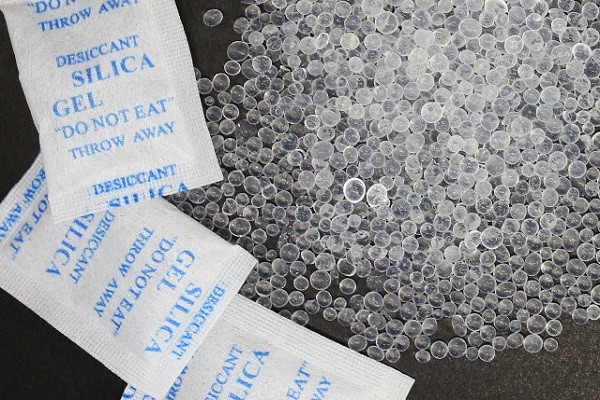
White Type A silica gel is classified as non-toxic under GHS (not classified as hazardous for acute toxicity, corrosion, or flammability). The FDA GRAS designation means it is safe in food packaging. However, packets are always labeled "DO NOT EAT" because silica gel does not dissolve in gastric acid and can cause mechanical obstruction if swallowed. Full article: Can You Eat Silica Gel?
Occupational exposure: prolonged inhalation of fine silica dust can cause silicosis — wear an N95 respirator when handling large quantities in bulk. Full MSDS: MSDS Silica Gel 2025. See also: MSDS Silica Gel — Explained Section by Section.
First Aid Protocol if Silica Gel Is Accidentally Ingested
Despite "DO NOT EAT" labeling, accidental ingestion by children or by warehouse workers mistaking packets for food sachets does occur. The clinical priority is: do not induce vomiting. Because silica gel granules are hard, angular particles, inducing emesis risks mechanical abrasion of the esophagus during regurgitation. The correct first-aid response for ingestion of standard white Type A silica gel (non-indicator) is to rinse the mouth with water, have the patient drink 1–2 glasses of water or milk to dilute any residual particles, and observe for symptoms of gastrointestinal obstruction (cramping, inability to swallow, persistent nausea). In the absence of symptoms and for quantities below approximately 5 g, most toxicology references classify this as a non-emergency. For quantities above 5 g, for ingestion by children under 12 kg body weight, or for any ingestion of blue-indicator silica gel (which contains cobalt chloride, a suspected carcinogen under ECHA classification), immediate medical evaluation is warranted. In the United States, contact the Poison Control Center at 1-800-222-1222; in the EU and Vietnam, contact emergency services (112 / 115) and present the product MSDS to medical personnel. The MSDS for CEMACO silica gel is available at MSDS Silica Gel 2025.
Why Mandatory "DO NOT EAT" Labeling Is Required Even for GRAS-Classified Silica Gel
A common point of confusion among procurement teams is the apparent contradiction between FDA 21 CFR 184.1711 GRAS status and the universal "DO NOT EAT" warning. GRAS classification means that the substance is recognized as safe for its specific intended function (anti-caking agent or desiccant in packaged food at regulated usage levels) — it does not mean the product is consumable in arbitrary quantities or forms. Solid silica gel granules are insoluble in gastric acid and water, and swallowing quantities above trace amounts introduces a risk of gastrointestinal mechanical obstruction independent of any chemical toxicity. Furthermore, the "DO NOT EAT" label serves an additional regulatory purpose under REACH SVHC labeling obligations: blue-indicator silica gel containing cobalt(II) chloride (CAS 7646-79-9) is classified as a Substance of Very High Concern (SVHC) under REACH Annex XIV (EU 2023 candidate list update), requiring explicit hazard communication to downstream users. GHS pictogram requirements under UN GHS Rev. 9 mandate the exclamation mark (⚠) pictogram and Hazard Statement H341 (suspected of causing genetic defects) on cobalt-indicator products. For exporters shipping to EU buyers, confirming that your silica gel supplier uses cobalt-free indicators (orange or self-indicating moisture cards) eliminates this regulatory exposure entirely.
8. How to Select a Reliable Silica Gel Supplier — Five Criteria
Criterion 1 — Certifications and Technical Documentation
A reliable supplier must provide: a Certificate of Analysis (CoA) per batch, MSDS/SDS per GHS/OSHA format, and an ISO 9001 quality management certificate. For food applications, HACCP or ISO 22000 is additionally required. CEMACO holds both ISO 9001 and HACCP — download certificates at ISO 9001 Certificate 2025, HACCP Certificate 2025. See the CEMACO Certifications page.
Criterion 2 — MOQ and Flexibility
Excessively high MOQs force SMEs to overstock. CEMACO accepts orders from 100 packets (sample trial) through full-container quantities with tiered pricing. Confirm both MOQ and lead-time policy before entering a long-term supply agreement.
Criterion 3 — Lead Time and Delivery Capacity
Container loading schedules are fixed — desiccant lead times must be reliable. Ask whether the supplier maintains a warehouse stock of more than 50 tonnes and whether same-day delivery is available for urgent orders. CEMACO maintains a Ho Chi Minh City warehouse with same-day delivery for orders placed before noon.
Criterion 4 — Origin Traceability
High-quality silica gel is manufactured in China (reputable brands: Hengye, Grace, Qingdao Meigao) or India (Sorbead India). Sub-standard product typically absorbs 20–40% less moisture than claimed. Always request batch numbers for traceability. Sample CoA: CoA Silica Gel Batch Q1/2025.
Criterion 5 — Technical Support and Application Advisory
A quality supplier advises on the right product for your application, calculates the correct loading rate, and helps you meet importer requirements for documentation. Contact CEMACO: Hotline 0983 929 232 (24/7) or the contact form.
Warning Signs of Sub-Standard Silica Gel
- Excessive dust and fragmentation when the packet is shaken — poor binder quality.
- Ammonia or chemical odor — contamination during production.
- Faded printing, no batch number, no manufacturer information on packaging.
- Price 30–40% below market rate with no explanation.
- No CoA, or CoA with only a generic product name and no analytical data.
For a comprehensive comparison of silica gel, clay desiccant, and CaCl₂, see Complete Comparison: Silica Gel vs. Clay vs. CaCl₂ (Flagship F4).
9. FAQ — Frequently Asked Questions About Silica Gel
In B2B procurement, the FAQ section is not a convenience feature — it is a decision-support tool. Buyers evaluating a new desiccant supplier face layered uncertainty: technical (will this product perform to spec?), regulatory (will it pass our buyer’s import audit?), operational (will it fit our existing packaging line?), and commercial (is the price-to-performance ratio justified?). This FAQ addresses all four dimensions with answers grounded in industry standards (ASTM, JEDEC, FDA, REACH) rather than marketing language. Each answer includes a link to the relevant full-length technical article for buyers who need deeper documentation for internal approval processes.
The eleven questions below are organized by stage of the procurement decision journey. Questions 1–3 address the Awareness and Technical Evaluation stage: understanding product types, food-contact rules, and sizing. Questions 4–6 address the Comparison and Compliance stage: why absorption stops, indicator chemistry safety, and MSDS interpretation. Questions 7–8 address the Operational and Storage stage: shelf life, handling constraints, and cargo interaction. Questions 9–10 address the Supplier Selection and Customization stage: substitution options, logo printing MOQ, and capacity testing. Question 11 is the benchmark technical specification question for quality control engineers. If your question falls outside these eleven, contact CEMACO directly — Hotline 0983 929 232 (24/7) or the RFQ form.
1. What is the difference between silica gel Type A and Type B?
Type A has smaller pores (2–3 nm), faster uptake at low humidity (RH 20–50%), and suits fluctuating-humidity environments. Type B has larger pores (5–7 nm), greater total capacity at high humidity (RH 60–90%), and is preferred for long-term storage. Most export packaging applications use Type A.
2. Can silica gel be placed directly inside food containers?
Yes, if it is food-grade (white Type A, cobalt-free, with a CoA confirming ≥99% SiO₂). The packet must be positioned to avoid direct contact with food surfaces. EU and US buyers typically require EC 1935/2004 compliance or an FDA GRAS statement in the supplier dossier.
3. How many 500g silica gel packets does a 40ft container require?
Based on the MIL-D-3464E formula and typical Southeast Asia–to–Europe voyage conditions (30–45 days), a 40ft container of timber or garments typically requires 8–12 × 500g hanging strips at four standard hanging points. Electronics or longer voyages require recalculation by moisture load. Download the calculation guide: Container Desiccant Loading Guide PDF.
4. Why has my silica gel stopped absorbing moisture?
The silica gel has reached moisture equilibrium with its environment — there is no longer a vapor pressure differential to drive further absorption. This is a physical limit, not a product defect. Solution: regenerate at 110–130°C for 2–3 hours, or replace the packet if it has completed multiple cycles.
5. Is orange-indicator silica gel safer than blue-indicator?
Yes. Orange indicator (methyl violet or iron oxide) does not contain cobalt chloride, making it safer for food contact and electronics. Blue indicator uses cobalt chloride — classified by ECHA as an SVHC — and must not be used with food or electronics shipped to the EU or Japan.
6. What are the key sections of a silica gel MSDS?
Key sections: composition (SiO₂ ≥99%), GHS hazard classification (not classified as hazardous for acute toxicity, corrosion, or flammability), first-aid measures (prolonged inhalation of fine dust may cause silicosis — wear N95 respirator in bulk handling), and storage and disposal instructions. Full MSDS download: MSDS Silica Gel 2025. See MSDS Silica Gel — Explained Section by Section.
7. Does silica gel have an expiry date?
Sealed silica gel has a shelf life of 2–5 years from the manufacturing date. Once opened, effectiveness decreases quickly depending on ambient humidity. Store in sealed PE bags or airtight containers at below 30°C and RH <60%. Discard packets that have discolored or gained more than 15% over their original weight.
8. Will silica gel damage cargo it contacts?
White Type A silica gel does not react chemically with metals, plastics, fabric, wood, or food. However, very fine silica dust can settle on sensitive surfaces such as LCD screens or optical read heads — always use packets in intact non-woven pouches. For leather goods, pre-test because some dyes may be sensitive to the low-humidity microenvironment that silica creates.
9. Can silica gel be replaced by clay desiccant or CaCl₂?
It depends on the application. Clay (bentonite) costs 30–40% less than silica gel but performs poorly above 50°C. CaCl₂ absorbs 200–300% of its weight in moisture but liquefies when saturated, is not regenerable, and may corrode metals. Full analysis: Silica Gel vs. Clay vs. CaCl₂ for Containers.
10. Does CEMACO supply silica gel with custom logo printing?
Yes. CEMACO provides custom logo, factory name, and QR code printing on silica gel packets from 3g to 500g, with MOQs from 5,000 packets. Initial tooling lead time is 7–10 business days. Request a quote at the RFQ form or call Hotline 0983 929 232.
11. What is the maximum moisture absorption capacity of Type A silica gel?
At 25°C and RH 100%, Type A silica gel absorbs up to 37–40% of its own weight. At a typical maritime shipping humidity of RH 70–80%, absorption capacity reaches 25–30%. At RH 50%, approximately 15–20%. Full adsorption isotherm data is available in the TDS Silica Gel 2025.
10. Quick Comparison Table — Selecting the Right Silica Gel Type
| Criterion | White Type A | Orange Indicator | Blue Indicator (Cobalt) |
|---|---|---|---|
| Food packaging | Yes (FDA GRAS) | Yes (verify CoA) | NO |
| Electronics (RoHS) | Yes | Yes | NO (cobalt) |
| Visual saturation indicator | No (weigh or schedule) | Yes (orange → green) | Yes (blue → pink) |
| Regenerable | Yes (4–8 cycles) | Yes (4–6 cycles) | Yes, with limitations |
| Relative price | Lowest | 15–25% premium | 15–20% premium |
| Container hanging strips | Excellent | Excellent | Not recommended |
Get a Quote for Your Business — Silica Gel from CEMACO Saigon
CEMACO supplies 15 silica gel SKUs from 1g to 1,000g, certified ISO 9001 and HACCP, with same-day delivery in Ho Chi Minh City and nationwide logistics. Free trial packets for first orders over 500 units. Quote response within 2 business hours.
- Request a Free Quote
- Hotline: 0983 929 232 (24/7)
- Browse all Silica Gel products
- Download Technical Data Sheet PDF
Need a quote based on this article?
The CEMACOSG technical team provides free consultation on desiccant quantity tailored to your cargo, route, and export requirements.