
Desiccant Calculator for 20ft / 40ft Container by Cargo Type
Accurate calculation tables for silica gel and calcium chloride desiccant quantities for 20ft and 40ft containers across 7 common Vietnamese export cargo types. Avoid the 5 most common calculation mistakes.
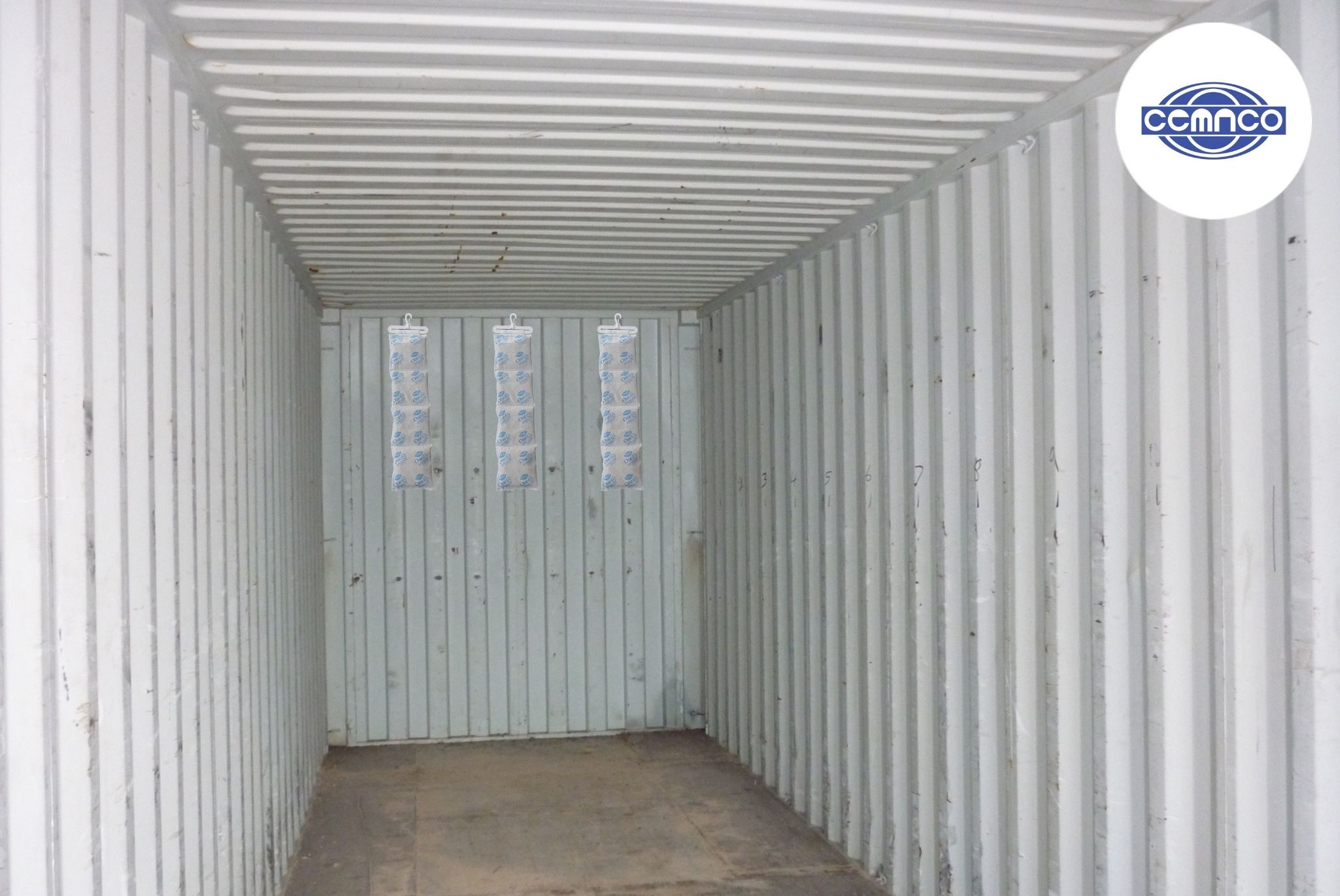
TL;DR — Summary
A standard 20-foot container (33 m³ air space) with average cargo requires 1.2–1.8 kg of silica gel or 1–1.5 kg of calcium chloride for routes under 15 days. Long routes of 20–35 days through multiple climate zones require double the quantity. A 40-foot container (67 m³) doubles all figures. The critical variable is not container size but cargo moisture content and transit duration — this article provides complete calculation tables for the 7 most common Vietnamese export cargo types.
Why Accurate Desiccant Calculation Matters
Many Vietnamese exporters apply the rule of thumb "4 one-kilogram bags per 20-foot container" — a figure with no scientific basis that typically under-doses by 40–60% for agricultural or fresh-cut timber cargo, while simultaneously over-dosing by 2–3× for sealed electronics packaging.
The consequences of both extremes:
- Under-dosing: Container Rain occurs, cargo molds, losses from USD 500 to tens of thousands per container, insurance claims, buyer relationship damage.
- Over-dosing: Unnecessary desiccant cost increases of 200–300% — for exporters shipping 50–100 containers per month, this waste can reach hundreds of millions VND annually.
Calculation Formula
Total moisture to process (g) = Air moisture + Cargo moisture emission. At 30°C/80% RH: ~24 g/m³. References: World Shipping Council moisture damage guidelines + Cargo Incident Notification System (CINS).
20-Foot Container Calculation Table (33 m³ air space)
| Cargo Type | Initial Cargo RH (%) | Moisture to Process (g) — 20-day transit | Silica Gel Rec. (kg) | Calcium Chloride Rec. (kg) | Hanging Strips | Pallet Bags |
|---|---|---|---|---|---|---|
| Green coffee beans (MC 11–12%) | 65–70% | 4,500 – 6,000 | 12–16 | 3–4 kg (strips × 3–4) | 3–4 strips | 4–6 kg silica |
| Sawn timber (MC 15–18%) | 75–85% | 8,000 – 12,000 | 20–30 | 5–6 kg (strips × 4–5) | 4–5 strips | not needed |
| Garments in PE bags | 55–65% | 1,500 – 2,500 | 4–6 | 1.5–2.5 kg (strips × 2) | 2 strips | 50g/carton |
| Electronics in sealed boxes | 40–55% | 800 – 1,500 | 2–4 | 1–1.5 kg (strip × 1) | 1–2 strips | 100–500g/pallet |
| Footwear in shoe boxes | 55–65% | 1,500 – 2,500 | 4–6 | 1.5–2.5 kg (strips × 2) | 2 strips | 50g/box |
| Dried black pepper (MC 11–12%) | 60–70% | 2,500 – 4,000 | 6–10 | 2–3 kg (strips × 2) | 2–3 strips | not needed |
| Ceramics in foam packaging | 50–60% | 1,200 – 2,000 | 3–5 | 1.2–2 kg (strips × 1–2) | 1–2 strips | not needed |
Note: Figures apply to Vietnam → Europe/USA routes (20–30 days). Routes under 15 days: reduce by 30–40%. Vietnam → Japan/Korea (7–12 days): reduce by 50%.
40-Foot Container Calculation Table (67 m³ air space)
| Cargo Type | Initial Cargo RH (%) | Moisture to Process (g) | Silica Gel Rec. (kg) | Calcium Chloride Rec. (kg) | Hanging Strips | Pallet Silica Gel |
|---|---|---|---|---|---|---|
| Green coffee beans | 65–70% | 9,000 – 12,000 | 24–32 | 6–8 kg (strips × 6–7) | 6–7 strips | 8–12 kg |
| Sawn timber | 75–85% | 16,000 – 24,000 | 40–60 | 9–12 kg (strips × 8–10) | 8–10 strips | not needed |
| Garments in PE bags | 55–65% | 3,000 – 5,000 | 8–12 | 3–5 kg (strips × 3–4) | 3–4 strips | 50g/carton |
| Electronics in sealed boxes | 40–55% | 1,600 – 3,000 | 4–8 | 2–3 kg (strips × 2) | 2–3 strips | 100–500g/pallet |
| Footwear in shoe boxes | 55–65% | 3,000 – 5,000 | 8–12 | 3–5 kg (strips × 3–4) | 3–4 strips | 50g/box |
| Dried black pepper | 60–70% | 5,000 – 8,000 | 12–20 | 4–6 kg (strips × 4–5) | 4–5 strips | not needed |
| Ceramics in foam packaging | 50–60% | 2,400 – 4,000 | 6–10 | 2.5–4 kg (strips × 2–3) | 2–3 strips | not needed |
5 Key Calculation Variables
- Initial cargo moisture content (MC): The single most important factor. Timber at MC 10% requires 3–4× less desiccant than timber at MC 18%.
- Route and sailing time: Vietnam → Rotterdam (28–32 days) requires double the desiccant of Vietnam → Hong Kong (5–7 days). Winter voyages need 20–30% more.
- Total transit time (not just sailing time): Include port dwell at origin (1–5 days), transshipment delays (0–5 days), and port dwell at destination (1–7 days). Actual exposure is typically 30–50% longer than sailing time.
- Container type: High-cube containers have 12–14% more air volume than standard containers of the same length — increase desiccant proportionally.
- Secondary packaging materials: Fresh-cut timber pallets (MC > 15%) add 2–5 kg of moisture. Damp 5-layer cartons add 1–3 kg. These hidden sources are the most commonly missed in calculations.
Case Study: 20-Foot Container — 1,000 Cartons of Robusta Coffee
- Cargo: 1,000 × 20 kg cartons of green coffee, MC 12%, PP bags. Pallets: 10 pine pallets MC 14%.
- Route: Ho Chi Minh City → Hamburg, 33 days total. Warehouse: Ho Chi Minh City, August, RH 75%.
- Total moisture: 750g (air) + 3,200g (coffee) + 800g (pallets) = ~4,750 g total
- Solution: 4 × CaCl₂ strips 1.2 kg (capacity 9.6 kg — 2× safety margin) + 4 kg silica gel on pallets. Pack early morning.
Case Study: 40-Foot Container — 800 MDF Panels
- Cargo: 800 panels 18mm MDF, 12,800 kg, MC 9% kiln-dried, PE shrink-wrapped. Route: Cat Lai → Los Angeles (27 days).
- Solution: 6 × CaCl₂ strips 1.2 kg. Verify shrink wrap integrity — any tears double moisture emission. No pallet silica gel needed.
5 Common Calculation Mistakes
- Calculating by container volume only, ignoring cargo RH: A 20-foot container of fresh timber needs 10–15× more desiccant than the same container of electronics.
- Using sailing time only, ignoring port dwell: Missing 8–12 days of port exposure leads to 30–40% under-dosing.
- Using silica gel for high-RH cargo: Silica gel saturates in 3–5 days when RH exceeds 75%. Use calcium chloride or a combination.
- Packing during afternoon rainstorms: Afternoon RH of 85–90% (Ho Chi Minh City rainy season) increases initial container moisture by 50% compared to early morning packing.
- Forgetting pallet and carton moisture: Fresh timber pallets + damp cartons = 3–5 kg unaccounted moisture — a slow-motion container rain bomb.
Frequently Asked Questions
Can I use the same desiccant type for all cargo?
Not optimally. Use silica gel for low-RH precision applications (electronics, pharmaceuticals). Use calcium chloride for high-emission cargo (timber, agricultural products). Combine both for mixed loads.
Do these tables apply to reefer containers?
Not directly. Reefer containers require separate calculations based on setpoint temperature and cargo RH at that temperature.
Is over-dosing harmful?
Extreme over-dosing (RH below 30–35%) can cause cracking in timber, natural leather, and textiles. More practically, it wastes significant packaging budget for high-volume exporters.
Does desiccant expire?
Yes. Silica gel in sealed packaging: 24–36 months. Calcium chloride: 18–24 months. Improper warehouse conditions (RH > 60%) reduce effectiveness before the stated date.
Can I reuse CaCl₂ desiccant strips?
No. CaCl₂ converts to a saline solution upon moisture absorption — it cannot be regenerated by drying. Silica gel packets can be oven-dried and reused if not exposed to liquid water.
Read more — flagship article: Container Rain — Complete Anti-Condensation Handbook 2026 — Magnus–Tetens dew-point formula, psychrometric RH × temperature table, decision matrix across 7 cargo types.
Need a precise desiccant calculation for your export shipment?
Submit your cargo details (type, weight, MC, route) — CEMACO Sài Gòn's technical team responds within 2 business hours.
Request a consultation and quote — Hotline +84 983 929 232 (24/7)
Need a quote based on this article?
The CEMACOSG technical team provides free consultation on desiccant quantity tailored to your cargo, route, and export requirements.