EC 1935/2004 — EU Regulation on Food-Contact Materials for Desiccants
EC 1935/2004 is the EU framework regulation for food-contact materials. EC 10/2011 establishes a positive list and migration limit OML 60 mg/kg. Desiccants exported to the EU require a full Declaration of Conformity per Annex IV.
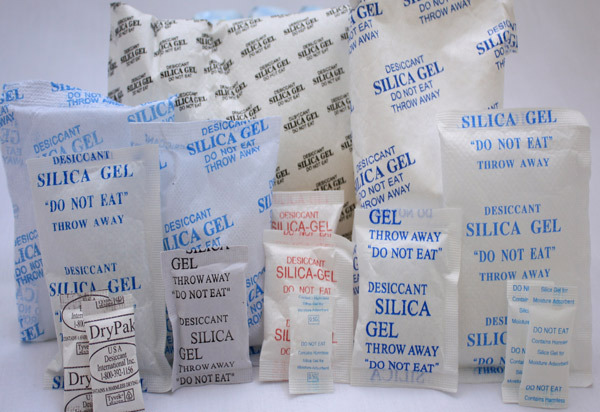
EC 1935/2004 is the EU framework regulation covering all materials and articles intended to contact food, applying to 17 material categories including plastics, paper, metals, and rubber. Desiccant sachets placed inside food packaging fall within scope. EC 10/2011 is the specific measure for plastic materials, establishing a positive list of permitted monomers and additives, an overall migration limit (OML) of 60 mg/kg food, and individual specific migration limits (SML) per substance. To export food (or food packaging) to the EU, desiccant suppliers must provide a full Declaration of Conformity (DoC) covering 8 mandatory items under Annex IV of EC 10/2011, supported by migration test results and a technical dossier. Blue CoCl₂ silica gel is listed as REACH SVHC — do not use for the EU market.
What Is EC 1935/2004 and How Does It Apply to Desiccants?
Regulation (EC) No 1935/2004 of the European Parliament and of the Council is the framework regulation on materials and articles intended to come into contact with food (Food Contact Materials — FCM). Its objective is to ensure that FCM does not transfer substances into food in quantities large enough to endanger human health, cause unacceptable changes in food composition, or deteriorate the organoleptic characteristics of food.
EC 1935/2004 applies to 17 material categories: plastics, ceramics, rubber, paper/board, glass, metals, wood, textile, waxes, varnishes, recycled materials, and composite materials. Each category may have an additional specific measure with more detailed technical requirements.
For desiccant sachets:
- Sachet material (Tyvek, PP nonwoven, OPP, PET laminated): plastic/nonwoven material in indirect contact with food → falls under EC 1935/2004 and EC 10/2011.
- Active ingredient (silica gel, clay): does not directly contact food but must not allow migration of harmful substances through the sachet wall into food → requires migration testing and DoC.
- Printing inks and adhesives: if sachet surface is printed, inks must comply with applicable national regulations or demonstrate separate compliance.
Legal source: EC 1935/2004 — EUR-Lex.
Full product catalog: CEMACO Sai Gon silica gel products.
US equivalent: FDA 21 CFR — US equivalent regulation.
EC 10/2011 — Specific Measure for Plastic Materials
Regulation (EU) No 10/2011 is the specific measure under EC 1935/2004 that applies to plastic materials and articles intended to contact food. It is the most technically detailed regulation directly affecting desiccant sachets made from plastic-based materials.
Core requirements of EC 10/2011:
- Positive list (Annex I — Union List): Only monomers and additives listed in the Union List may be used. Each substance is assigned an FCM substance number, CAS number, SML, and specific conditions of use.
- OML — Overall Migration Limit: The total quantity of all substances migrating from the material into food must not exceed 60 mg/kg food (or 10 mg/dm² contact surface in specific cases).
- SML — Specific Migration Limit: Individual migration limit for each regulated substance. For example, bisphenol A (BPA) carries an SML of 0.05 mg/kg; some substances have SML "not detectable" (ND), meaning they must not be measurable at any concentration.
- Functional barrier: If a non-compliant layer is separated from food by a functional barrier (a sufficiently thick and dense plastic layer), migration can be demonstrated as negligible (SML ≤ 0.01 mg/kg for substances without a specific SML).
For common desiccant sachet materials:
- Polypropylene (PP) nonwoven: PP is listed in the EC 10/2011 positive list with multiple conditions of use. Additives used in manufacturing (antioxidants, stabilizers) must also appear in the positive list.
- Polyethylene terephthalate (PET) laminated: PET is approved, but residual monomers (e.g., acetaldehyde) and additives must comply with SML requirements.
- Tyvek (HDPE flash-spun): HDPE is listed, but EU compliance confirmation from the manufacturer (DuPont) is required.
Source: EC 10/2011 — EUR-Lex.
Migration Testing — Demonstrating Compliance
Migration testing is the experimental method used to demonstrate that the quantity of substances migrating from FCM into food does not exceed OML or SML limits. It is a mandatory requirement for completing the DoC under EC 10/2011.
Food simulants are defined in Annex III of EC 10/2011:
- Simulant A: 10% ethanol — simulates aqueous, hydrophilic foods (pH > 4.5)
- Simulant B: 3% acetic acid — simulates acidic foods (pH ≤ 4.5)
- Simulant C: 20% ethanol — simulates alcoholic foods
- Simulant D1: 50% ethanol — simulates fatty foods and emulsions
- Simulant D2: Rectified vegetable oil — simulates high-fat foods
- Simulant E: Poly(2,6-diphenyl-p-phenylene oxide) — simulates dry foods
Standard test conditions per Annex V EC 10/2011:
- Ambient or refrigerated storage (≤ 40°C): 40°C / 10 days
- Hot-fill products (pasteurization): 70°C / 2 hours + 40°C / 10 days
- Sterilized products: 121°C / 30 minutes
For desiccant sachets in dry food packaging (dried seafood, nuts, cookies), the most common test condition is Simulant E + 40°C / 10 days. Testing must be carried out by a laboratory accredited under EN ISO/IEC 17025.
Application guide: Desiccant applications in the food industry.
For apparel exporters: Desiccant applications for garment export to EU.
Declaration of Conformity (DoC) — Mandatory Document
The Declaration of Conformity (DoC) is a mandatory document that FCM manufacturers or importers must prepare and maintain under EC 1935/2004 (Article 16) and EC 10/2011 (Article 15 + Annex IV). The DoC must be available for inspection by EU authorities at any point in the supply chain.
8 mandatory items per Annex IV EC 10/2011:
- Name and address of the manufacturer or the person responsible for the DoC
- Identity of the FCM (product name, code)
- Date of the DoC
- Confirmation that the FCM complies with EC 1935/2004, EC 10/2011, and any applicable specific measures
- Adequate information about substances used or test results demonstrating compliance
- Conditions of use (temperature, food type, surface area to volume ratio)
- If a functional barrier is present: statement and applicable conditions
- Name and signature of the authorized person
Vietnamese food manufacturers purchasing desiccant sachets for inclusion in EU-bound food packaging should request DoC documentation from their desiccant supplier. EU importers may be required by national authorities to present the full DoC chain — including for the desiccant sachet. Missing DoC = risk of goods rejection or regulatory penalties.
See also: CEMACO Sai Gon ISO 9001 + HACCP Certifications.
Download: MSDS + DoC framework silica gel 2025.
EC 1935/2004 vs. FDA 21 CFR — Comparison Table
| Criterion | EC 1935/2004 + EC 10/2011 (EU) | FDA 21 CFR §184.1711 + 174-186 (US) |
|---|---|---|
| Framework | Mandatory EU framework regulation — 27 member states + Norway/Iceland/Liechtenstein (EEA) | US federal law, mandatory in the United States |
| Specific measure for silica gel | No dedicated specific measure — compliance must be demonstrated through migration testing and DoC | 21 CFR §184.1711 grants GRAS status to silicon dioxide directly |
| Required documentation | DoC (8 mandatory items), migration test report, technical dossier | Letter of Guarantee (commercial) or technical DoC (depending on buyer requirement) |
| Migration limit | OML 60 mg/kg + SML per substance (EC 10/2011 Annex I) | No explicit overall migration limit; regulated per substance and condition of use |
| Enforcement | National food authorities of each member state + EFSA (scientific advisory) + EU market surveillance | FDA directly + CBP (customs) at US ports of entry |
| Mutual recognition | EU does not automatically recognize FDA 21 CFR — separate EU DoC required | FDA does not automatically recognize EC 1935/2004 — separate FDA LoG/DoC required |
Practical conclusion: Businesses exporting food to both the US and the EU require separate documentation sets for each market. CEMACO Sai Gon can provide Letter of Guarantee (FDA) and DoC framework support (EU) for customers with dual-market requirements.
See: FDA 21 CFR — full US compliance guide.
Apparel export: OEKO-TEX standards for garment export to EU.
Frequently Asked Questions
What is the most important difference between EC 1935/2004 and FDA 21 CFR?
The most critical difference: FDA grants direct GRAS affirmation to silicon dioxide under 21 CFR §184.1711, while the EU has no specific measure dedicated to silica gel. In the EU, manufacturers must independently demonstrate compliance through migration testing and produce a full 8-item DoC. Additionally, the EU mandates DoC for the entire FCM supply chain, whereas FDA requirements are more flexible — a commercial Letter of Guarantee is typically sufficient for US buyer requirements.
What are OML and SML?
OML (Overall Migration Limit) is the total limit for all substances migrating from FCM into food — set at 60 mg/kg food (or 10 mg/dm² surface area) under EC 10/2011. SML (Specific Migration Limit) is the limit for each individual substance, listed in Annex I of EC 10/2011. Materials must simultaneously comply with both OML and all applicable SML values.
Who performs migration testing and where?
Migration testing must be performed at a laboratory accredited under EN ISO/IEC 17025. In practice, packaging material suppliers (Tyvek, OPP, PET) typically hold migration test reports from accredited labs, which they provide alongside a Statement of Compliance. Vietnamese desiccant manufacturers should request these reports and consolidate them into their own DoC. If test reports are not available, samples can be submitted to accredited testing bodies such as SGS, Intertek, or Bureau Veritas for EU FCM testing services.
Who signs the DoC and where is it stored?
The DoC must be signed by an authorized representative of the FCM manufacturer — typically a QA Manager or Production Director. Under EC 1935/2004 Article 16, the DoC must be available for regulatory inspection and must be provided to all buyers in the supply chain. Minimum retention period is typically 10 years or as required by the relevant member state.
Does Brexit affect EC 1935/2004 compliance for UK exports?
Following Brexit, the UK enacted its own legislation — primarily The Materials and Articles in Contact with Food (England) Regulations 2010 and subsequent statutory instruments — which retained the substance of EC 1935/2004 and EC 10/2011 as of the Brexit transition date (31 December 2020). Exporters to the UK need a DoC under the UK framework, which is substantively similar to the EU framework but is a legally separate document. An EU DoC does not automatically carry legal force in the UK and vice versa.
Read more — flagship article: Desiccant MSDS Handbook — Safety Documentation for US, EU & Japan Export Markets — REACH Article 31 language requirements (DE/FR/IT), CAS/EC/UN mandatory fields in food-contact DoC, and CFS for ASEAN markets.
Need DoC documentation and migration test support for EU-bound shipments?
CEMACO Sai Gon provides complete technical documentation — DoC framework, MSDS, Certificate of Analysis — for silica gel and clay desiccant products destined for European markets.
Hotline: 0983 929 232 (24/7) | Request a Quote
Need a quote based on this article?
The CEMACOSG technical team provides free consultation on desiccant quantity tailored to your cargo, route, and export requirements.