
Silica Gel vs Clay (Montmorillonite) — Structure, Performance, Cost Comparison
Silica gel and clay desiccants are both widely used in cargo protection, yet differ significantly in material structure, absorption performance, and cost. This guide compares both in detail to help you choose the right type for containers, timber, or garments — with a 30–40% cost gap.
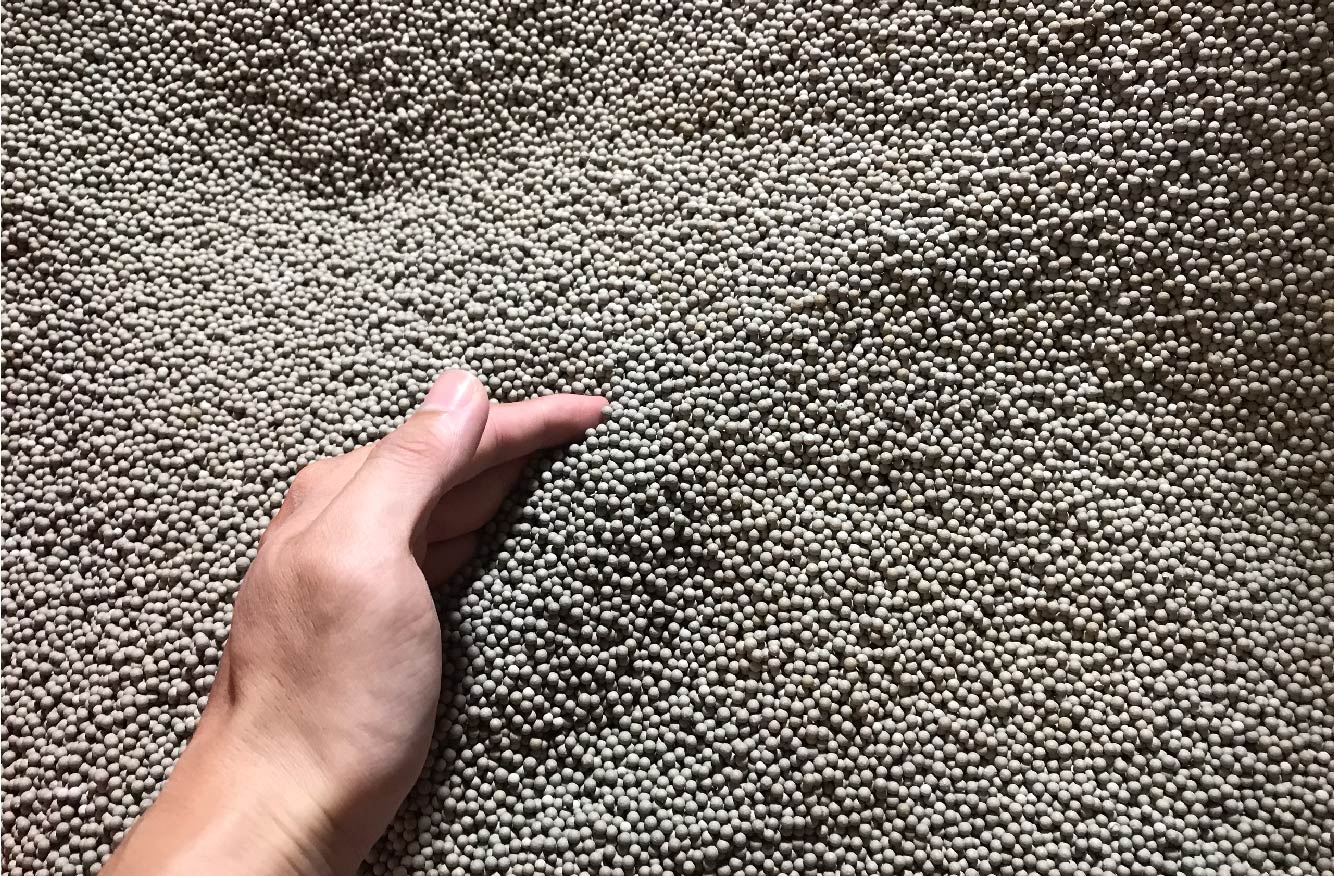
- Silica gel (synthetic SiO₂·nH₂O): absorbs 35–40% w/w, works from RH 10%, easy to regenerate. Best for electronics, pharmaceuticals, premium food. Costs 30–40% more.
- Clay desiccant (natural montmorillonite/bentonite mineral): absorbs 30–35% w/w, optimal at RH 40–70%. Best for containers, timber, garments. Lower cost.
- Selection rule: Low RH + sensitive cargo → silica gel; moderate RH + industrial cargo → clay. Combine both for long-haul containers with mixed cargo.
- CEMACO Sai Gon supplies both types, ISO 9001 + HACCP certified, flexible MOQ. Request a quote today.
What Are Silica Gel and Clay Desiccant?
When it comes to industrial desiccants, silica gel and clay desiccant are the two most commonly encountered names. Both serve to absorb moisture and protect cargo from mold, corrosion, and damage during storage or transport. However, their origins, structures, and performance characteristics differ significantly.
Silica gel is a synthetic material produced by reacting sodium silicate (Na₂SiO₃) with sulfuric acid to form hydrated silicon dioxide (SiO₂·nH₂O) in granular porous form. The tightly controlled manufacturing process ensures high uniformity in pore size and specific surface area. The final product is transparent white granules, 2–7mm in diameter, sometimes dyed blue (cobalt chloride) or orange (methyl violet) as saturation indicators.
Clay desiccant (or montmorillonite desiccant) originates from natural clay minerals, primarily montmorillonite — a member of the smectite group. Bentonite, a common clay, contains 60–80% montmorillonite. Clay desiccant is mined, ground, thermally activated (heated at 150–200°C to remove bound water), and packaged. Clay granules are grey-white or pale yellow with a rougher texture than silica gel.
Both types are widely used under international standards, including MIL-D-3464 (US military standard) and ISO 9001 for quality management systems. CEMACO Sai Gon applies ISO 9001 and HACCP across its entire production chain for both desiccant types.
Comparing Material Structure
The core difference between silica gel and clay lies in their microstructure — which directly determines moisture absorption performance.
Silica gel — synthetic porous structure: Silica gel features a three-dimensional SiO₂ network with billions of ultrafine pores (micropores and mesopores) ranging 2–10nm in diameter. Its specific surface area (BET surface area) reaches 600–800 m²/g — meaning 1 gram of silica gel has a total surface area equivalent to nearly a full soccer field. This enormous surface area creates a powerful moisture attraction (adsorption) via Van der Waals forces and hydrogen bonding.
Water molecules are attracted and retained within the pore network without any chemical reaction — a purely physical process (physisorption) that allows silica gel to regenerate simply by applying heat.
Clay (montmorillonite) — 2:1 mineral layer structure: Montmorillonite has a 2:1 layered structure, meaning each structural unit consists of two silica tetrahedral (SiO₄) sheets sandwiching one alumina octahedral (Al(OH)₃) sheet in the middle. Between the layers lies interlayer space where water molecules and exchangeable cations (Na⁺, Ca²⁺, Mg²⁺) reside. The residual negative charge on layer surfaces creates the characteristic moisture attraction.
Activated clay's specific surface area reaches 200–400 m²/g — lower than silica gel, but still sufficient for effective moisture control in the moderate RH range. Clay begins absorbing moisture strongly from RH ~40%, while silica gel starts from RH ~10%.
Key difference: When temperatures rise (as in steel containers under direct sunlight), clay tends to release moisture faster than silica gel, especially when ambient RH fluctuates sharply. Silica gel maintains better stability across a wider temperature range.
Technical Performance Comparison Table
The table below compares the most important technical performance indicators between silica gel and clay desiccant:
| Parameter | Silica Gel | Clay (Montmorillonite) |
|---|---|---|
| Max absorption (w/w) | 35–40% | 30–35% |
| Effective RH range | 10–90% | 40–90% |
| Absorption speed (first 24h) | Fast (absorbs ~70% capacity) | Moderate (absorbs ~55% capacity) |
| Reusability | Yes — dry at 120–150°C, 5–7 cycles | Yes — dry at 150–200°C, 2–3 cycles |
| Common granule size | 2–7mm (regular); 0.5–2mm (fine) | 2–5mm (granule) |
| Operating temperature | -40°C to +120°C | -20°C to +90°C |
| Performance at high temp (>40°C) | Stable | May release moisture |
| Saturation color indicator | Yes (blue/orange types) | No |
Data based on standard test conditions at 25°C. Actual performance depends on packaging conditions, cargo weight, and container seal integrity.
Cost and Environmental Comparison
Beyond technical performance, cost and sustainability are key factors for large-scale export businesses:
| Factor | Silica Gel | Clay (Montmorillonite) |
|---|---|---|
| Relative price (same spec) | 30–40% higher | Baseline |
| MOQ at CEMACOSG | Flexible — contact for quote | Flexible — contact for quote |
| Origin | Industrial synthetic | Natural mineral |
| Recyclability | Regenerable multiple times | Fewer regeneration cycles |
| Biodegradability | No (synthetic mineral) | Yes (natural mineral) |
| Production carbon footprint | Higher (synthesis process) | Lower (mining + activation) |
| Disposal after use | Landfill or regeneration | Safe — standard landfill |
| Certifications | ISO 9001, HACCP, FDA (E-grade) | ISO 9001, HACCP, GRAS (FDA) |
For exporters shipping one 40ft container per week, each requiring 100–200 desiccant pouches (500g each), the 30–40% price difference between silica gel and clay translates into significant annual savings. This is why clay desiccant is extremely popular in the container shipping and timber export industries.
Industry Applications — Which Type to Choose?
Choosing silica gel or clay is not about "which is better" but "which fits your specific requirement." Here is a guide by industry:
Choose Silica Gel when:
- Electronics & components: Electronic devices, circuit boards, and semiconductor chips are extremely moisture-sensitive. Silica gel maintains RH <40% even when temperatures fluctuate. Requires moisture absorption from RH 10% — a capability clay cannot match.
- Pharmaceuticals & sensitive chemicals: Tablets, powder drugs, and analytical chemicals require extremely dry environments. E-grade silica gel (cobalt-free) is FDA-approved for direct pharmaceutical contact.
- Premium food products: Roasted coffee, tea, herbs, and premium jams need extremely low RH to preserve flavor. Food-grade silica gel is odorless, tasteless, and FDA GRAS-listed.
- Long-term storage (>6 months): Silica gel maintains more stable absorption capacity than clay for extended storage periods.
Choose Clay Desiccant when:
- Timber export: Raw timber, flooring, and furniture require RH control at 50–70%. Clay performs well in this range at lower cost, suitable for large volumes. Learn more at CEMACO Sai Gon's container applications page.
- Garments & footwear: Fabrics, clothing, and leather goods need mold prevention without requiring an extremely dry environment. Clay's 30–35% w/w is sufficient while reducing packaging costs.
- General cargo containers: Consumer goods, household items, and mechanical parts shipped by container. Clay is the economical optimum at 30–40% lower cost than silica gel.
- High-volume, budget-conscious orders: When ordering tens of thousands of pouches per month, the price differential becomes the deciding factor.
For in-depth performance analysis in container environments, see CEMACO Sai Gon's article on container shipping desiccant comparison.
When to Combine Both Silica Gel and Clay?
In some scenarios, combining both desiccant types within the same container delivers optimal results, particularly for long-haul containers with mixed cargo.
A typical example: a 40ft container carrying both electronics (requiring RH <40%) and garment accessories (requiring light mold prevention). The optimal solution is placing silica gel directly inside electronics boxes and hanging clay 500g bags on container bar rods for overall humidity control.
The combination strategy also applies to ocean containers on long voyages (>30 days, such as Vietnam — EU/US routes) where climatic conditions change across multiple geographic zones. Clay handles moderate RH when the vessel crosses tropical zones; silica gel maintains low RH when entering cooler climates.
CEMACO Sai Gon's technical team can advise on optimal combination ratios based on cargo type, shipping route, and storage conditions. Contact us for a free consultation.
Frequently Asked Questions
Is silica gel or clay desiccant more effective?
Silica gel has higher absorption capacity (35–40% by weight) compared to clay (30–35%) and works across a wider RH range (from RH 10%). However, clay is 30–40% cheaper and sufficiently effective for containers, timber, and garments that do not require highly precise humidity control. Neither type is absolutely "better" — choosing the right type for the right application is what matters.
When should I use clay instead of silica gel?
Use clay when cargo needs moderate humidity control (RH 40–70%), the budget is limited, or when shipping timber/garment containers on routes under 30 days. Clay is also ideal when ordering large volumes to optimize packaging costs. Explore CEMACO Sai Gon's clay desiccant product range for specifications.
Is clay desiccant food-safe?
Montmorillonite clay is a natural, non-toxic mineral recognized as safe by the FDA (USA) and EFSA (EU) for indirect food contact (GRAS status). However, for directly packaged premium food products requiring HACCP certification, food-grade E-grade silica gel is recommended. CEMACO Sai Gon offers both types with HACCP certification.
What is the cost difference between silica gel and clay?
Clay desiccant is typically 30–40% cheaper than silica gel for the same weight and packaging specification. For a 40ft container requiring 100–200 pouches of 500g desiccant, the savings are substantial. Contact CEMACO Sai Gon for volume-specific pricing.
Can silica gel and clay be reused?
Silica gel can be regenerated by drying at 120–150°C for 2–4 hours, recovering 80–90% of initial absorption capacity, reusable for 5–7 cycles. Clay desiccant can also be regenerated by drying, but with fewer cycles (2–3 times). In container shipping practice, both types are typically used once to ensure maximum effectiveness. Also compare with silica gel vs calcium chloride when evaluating all desiccant options.
Read more — flagship article: Comprehensive Comparison: Silica Gel vs Clay vs CaCl₂ 2026 — 15 technical criteria, performance vs. RH × temperature × duration, 5-industry TCO analysis, and a 7-step decision tree for the right choice the first time.
Need advice on choosing silica gel or clay for your shipment?
CEMACO Sai Gon's technical team is ready to analyze your specific requirements — cargo type, shipping route, budget — and recommend the optimal solution.
- Hotline: 0983 929 232 (24/7)
- Email: info@cemacosg.vn
- Request a quote →
Need a quote based on this article?
The CEMACOSG technical team provides free consultation on desiccant quantity tailored to your cargo, route, and export requirements.