Silica Gel vs Clay vs CaCl₂ — Which Desiccant Is Best for Container Shipping?
A technical and economic comparison of silica gel (30–40% capacity), clay montmorillonite (30–35%) and calcium chloride CaCl₂ (200–300% deliquescent) across 10 criteria. Includes cargo-profile selection guide and cost comparison per 20ft container.
TL;DR
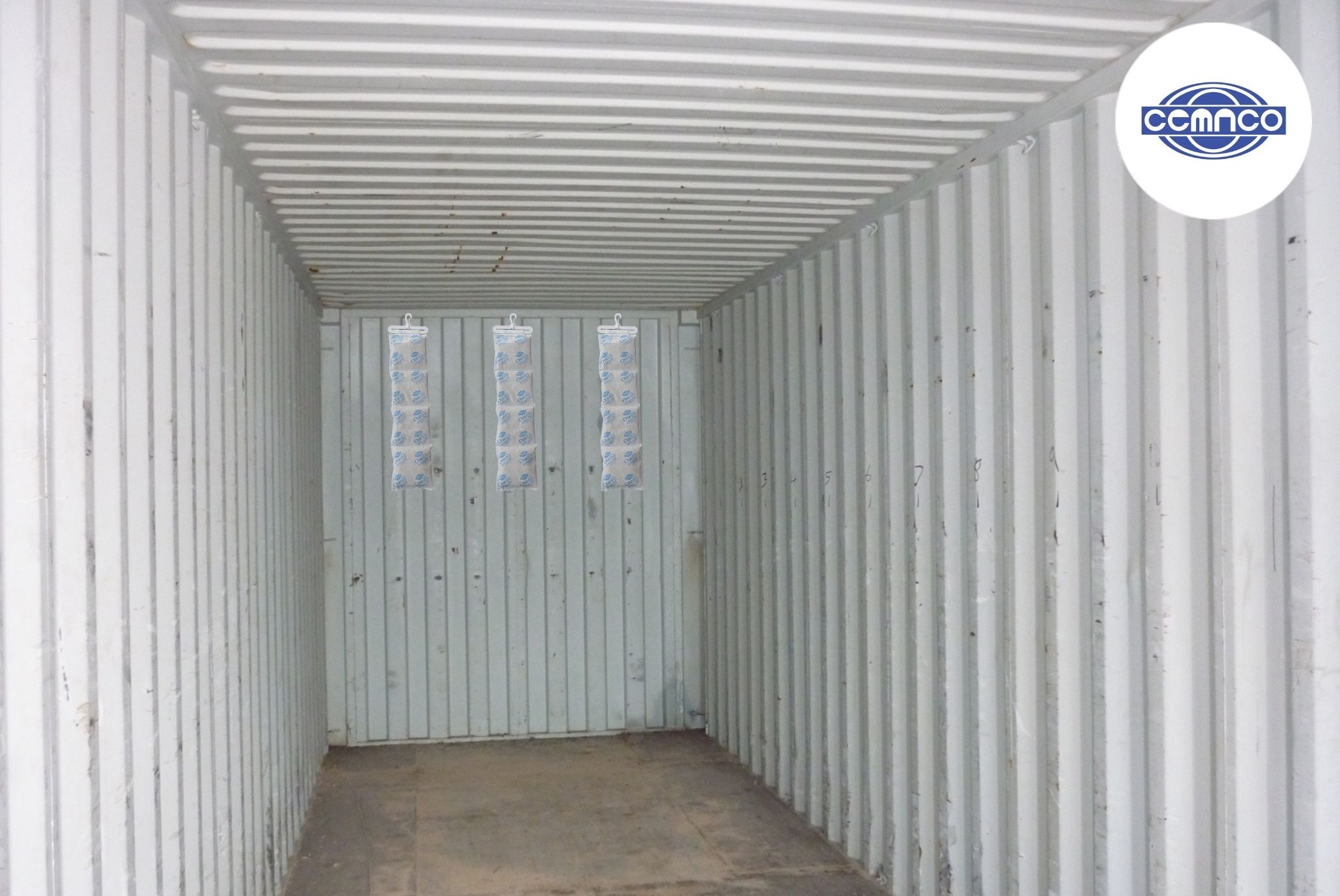
Silica gel (30–40% absorption by weight) performs reliably across a wide temperature range, ideal for moisture-sensitive cargo such as electronics, pharmaceuticals, and packaged food. Clay desiccant (15–25%) costs 30–40% less than silica gel, making it the economical choice for bulk cargo like timber, garments, and footwear. Calcium chloride CaCl₂ (200–300% — deliquescent) delivers the highest absorption capacity for long-haul container shipping, especially when cargo RH is elevated, but requires SAP packaging to prevent gel leakage. Optimal strategy: combine CaCl₂ hanging strips on container walls with silica gel or clay on pallets.
Overview of 3 Common Container Desiccants
Export cargo shipped in containers must withstand significant temperature swings — from tropical Vietnam to temperate Europe or North America — causing repeated moisture condensation on container walls, a phenomenon known as "container rain" or "container sweat." The three most common desiccant types address this problem through fundamentally different mechanisms:
- Silica Gel (SiO₂): Physical adsorption (physisorption) — water molecules are trapped in micropores without changing the physical state of the desiccant. Regenerable by oven drying at 110–130°C.
- Clay (Montmorillonite / Bentonite): Water absorption into natural mineral layers via intercalation — water molecules insert between silicate layers. Not practically regenerable under industrial conditions.
- Calcium Chloride CaCl₂ (Deliquescent): Chemical reaction with moisture, converting from solid to liquid gel. Superior capacity but requires SAP (Super Absorbent Polymer) packaging to contain the gel.
Silica Gel — SiO₂ Porous Structure
Silica gel is a synthetic amorphous silicon dioxide with a microporous network. Key technical parameters:
- Average pore diameter: 2.4 nm (Type A).
- BET surface area: 600–800 m²/g.
- Adsorption isotherm: Type I (IUPAC) — efficient at low-to-medium RH (20–50%), gradually saturates above 60% RH.
- Operating temperature range: –40°C to 300°C; optimal at 20–30°C.
- Practical capacity (RH 40–70%): 10–20% by weight.
- Maximum capacity (RH 90%): 35–40% by weight.
Advantages: FDA 21 CFR 184.1711 approved; no leakage risk; regenerable; compatible with all cargo types including electronics and pharmaceuticals.
Disadvantages: Capacity is 5–10× lower than CaCl₂ at high RH; 40–60% more expensive than clay; may saturate quickly in sustained high-RH tropical routes.
Clay (Montmorillonite Bentonite) — Natural Mineral
Clay desiccant is produced from montmorillonite or bentonite — natural layered silicate minerals. Absorption occurs via intercalation: water molecules insert between 2:1 silicate layers, expanding the d-spacing from 0.96 nm to 1.2–1.5 nm.
Key specs: Capacity 30–35% at RH 90%; effective range 25–50°C; surface area 150–300 m²/g.
Advantages: 30–40% lower cost than silica gel; natural origin; stable at tropical temperatures; no leakage when saturated.
Disadvantages: Lower capacity; not regenerable; no default FDA food contact certification; reduced performance below 10°C.
Calcium Chloride (CaCl₂) — Deliquescent Salt
Calcium chloride is an inorganic salt with a unique deliquescent property: it absorbs moisture until it fully dissolves into a liquid solution. Industrial CaCl₂ desiccants come in granule or powder form, packaged in dual-layer systems: inner SAP layer retains the gel, outer non-woven layer allows airflow.
Key specs: Capacity 200–300% by weight of CaCl₂; operating range 5–50°C; most effective at RH > 60%.
Advantages: Unmatched capacity for long-haul routes; effective up to 90–95% RH; hanging strip format maximizes space efficiency.
Disadvantages: Single-use only; gel leakage risk if SAP packaging is damaged; not suitable for direct food contact; slight odor when saturated.
10-Criterion Comparison Table
| Criterion | Silica Gel | Clay (Montmorillonite) | CaCl₂ (Deliquescent) |
|---|---|---|---|
| Max capacity (% w/w) | 35–40% | 30–35% | 200–300% |
| Working temperature (°C) | –40 to 300°C | 25–50°C | 5–50°C |
| Optimal RH (%) | 30–70% | 40–80% | 60–95% |
| Relative cost | Medium | Low (–30 to –40%) | Low–Medium (per capacity) |
| Packaging options | Tyvek, non-woven, OPP, pellet | Non-woven pouch, PE bag | SAP hanging strip, SAP pouch |
| Safety certifications | FDA 21 CFR 184.1711, ISO 9001, HACCP | ISO 9001 | ISO 9001 |
| Regenerable | Yes (oven 110–130°C) | No | No |
| For 20ft container | 4–6 kg | 6–8 kg | 3–4 strips × 500g |
| For 40ft container | 8–12 kg | 12–16 kg | 6–8 strips × 500g |
| Direct food contact | Yes (FDA) | Not by default | No |
Cost Comparison per 20ft Container
| Desiccant Type | Quantity Needed | No. of Units | Relative Cost | Relative Effectiveness |
|---|---|---|---|---|
| Silica Gel 500g | 4–6 kg | 8–12 pouches | Baseline (1×) | Good for RH < 60% |
| Clay 500g | 6–8 kg | 12–16 pouches | 0.6–0.7× (30–40% lower) | Medium — suitable for bulk cargo |
| CaCl₂ Strip 500g | 1.5–2 kg CaCl₂ net | 3–4 strips | 0.8–0.9× | Best for RH > 60% long-haul |
| Combo: CaCl₂ wall + Silica pallet | 1 kg CaCl₂ + 3 kg SG | 2 strips + 6 pouches | 1.1–1.2× (highest) | Optimal — recommended for high-value cargo |
Selection by Cargo Profile — 7 B2B Cases
| Cargo | Recommendation | Reason | Suggested Combo |
|---|---|---|---|
| Green/roasted coffee | CaCl₂ strip + Silica Gel | Highly hygroscopic; tight RH control needed for long routes | 3 × CaCl₂ 500g wall + 200g SG per jute bag |
| Pepper & spices | CaCl₂ strip + Clay | Mold-sensitive; clay cost-effective for pallet, CaCl₂ handles wall condensation | 3 × CaCl₂ wall + clay 200g pouches on pallet |
| Rough timber (lumber) | Clay | High initial moisture content; large desiccant volume needed at low cost | Clay 500g pouches spread across floor area |
| Finished wood (furniture) | Silica Gel + CaCl₂ | Precision RH control 45–55% to prevent warping | 4 × CaCl₂ strips wall + SG 100g per carton |
| Electronics (PCB, components) | Silica Gel White Type A | FDA/RoHS compliant; no leakage; RH < 40% inside sealed packaging | SG 50g Tyvek in each vacuum bag + 500g in master carton |
| Garments & textiles | Clay or Silica Gel | RH 50–60%; no food contact required | Clay 200g per carton (standard); SG 50g Tyvek for premium brands |
| Footwear & leather goods | Clay or CaCl₂ strip | Mold and odor sensitive; clay sufficient for sealed packaging | Clay 50g per shoe box + 2 × CaCl₂ strips if route > 20 days |
5 Common Mistakes in Container Desiccant Selection
- Using silica gel alone on long high-RH routes without capacity calculation: Silica gel saturates within 7–10 days at sustained RH > 70%, leaving the cargo unprotected for the remaining 20–30 days.
- Using CaCl₂ for odor-sensitive or unpackaged electronics cargo: Gel leakage from damaged SAP packaging can damage electronics or absorb product odors.
- Relying on a single desiccant type for high-value cargo: A combo approach costs 10–20% more but provides dual-layer protection against both wall condensation and micro-climate moisture in cartons.
- Ignoring route climate variations: Vietnam → Japan (7–10 days, low thermal swing) needs far less desiccant than Vietnam → Hamburg (25–35 days, Suez + Mediterranean temperature cycling).
- Using cheap clay for electronics or unpackaged food exports to EU/USA: Clay lacks FDA food contact certification and does not meet RoHS/REACH requirements for EU electronics.
CEMACOSG Mix Strategy Recommendations
- Agricultural / Food containers (coffee, spices, rice): 3–4 × CaCl₂ desiccant strips 500g on walls + silica gel 100–200g inside each individual bag/pouch. Use 1,000g strips for routes over 30 days.
- Timber containers: Rough timber → clay desiccant 500g pouches at 1 pouch/m² floor area. Finished wood → silica gel 500g per carton + CaCl₂ strips on walls.
- Electronics containers: Silica Gel White Type A 50g Tyvek inside each component bag + 500g pouches in master cartons. Do not use CaCl₂ or clay.
- Garment containers: Clay 200g per carton for standard goods; silica gel 50g Tyvek for premium brands requiring clean packaging.
- Footwear containers: Clay 50g per shoe box + 2–3 CaCl₂ strips on walls for routes over 20 days. Strips must be mounted high, not in direct contact with goods.
Frequently Asked Questions
Is silica gel more effective than calcium chloride? It depends on conditions. Silica gel outperforms at low-to-medium RH (30–60%) and where leakage is unacceptable (electronics, pharmaceuticals). CaCl₂ vastly outperforms at high RH (>60%) and long container routes due to 5–10× higher capacity. Can clay desiccant be used in food containers? Yes, if the food is already sealed in individual packaging and clay has no direct food contact. For direct food contact (unpackaged products), silica gel with FDA 21 CFR 184.1711 certification is required. How many CaCl₂ strips does a 40ft container need? Typically 6–8 strips of 500g for a 40ft container on a 20–30 day route. Moisture-sensitive cargo or routes over 30 days require 8–12 strips. Contact CEMACOSG at +84 983 929 232 for route-specific calculations. Is the CaCl₂ wall + silica pallet combo necessary? For high-value cargo or long routes: yes. The combo addresses two distinct moisture sources — CaCl₂ handles large-volume condensation from container walls; silica gel controls micro-climate RH within individual cartons. Is clay biodegradable? Yes — montmorillonite clay is a natural mineral, biodegradable and non-toxic to the environment. This is an advantage when EU customers have packaging sustainability requirements.Read more — 2 related flagship articles: Container Rain — Complete Anti-Condensation Handbook 2026 · Comprehensive Comparison: Silica Gel vs Clay vs CaCl₂ 2026 — 15 technical criteria + 5-industry TCO + 7-step decision tree.
Need expert guidance on the optimal desiccant strategy for your specific cargo profile? CEMACOSG provides capacity calculations, product combinations, and full compliance documentation (MSDS, FDA letter, HACCP certificate, ISO 9001).
Request a Quote or call +84 983 929 232 (24/7).
References: World Shipping Council — Container Safety & Moisture · IICL Container Handbook · ASTM D4814 Desiccant Testing Standard
Need a quote based on this article?
The CEMACOSG technical team provides free consultation on desiccant quantity tailored to your cargo, route, and export requirements.