Clay Desiccant: What It Is, Uses and Practical Applications
Clay (bentonite/montmorillonite) is a natural, low-cost desiccant that costs 30–50% less than silica gel, is environmentally friendly and regenerable. Learn about its absorption mechanism, how it compares with silica gel, and its use in container, wood and garment exports.
TL;DR — 60-Second Summary
Clay desiccant (bentonite) is a natural moisture-absorbing mineral derived from montmorillonite (CAS 1302-78-9) with a BET surface area of 50–150 m²/g and moisture uptake capacity of 30–35% by weight at RH 30–80%. Compared with silica gel, clay costs 30–50% less, is more environmentally friendly, fully regenerable, and suitable for most container, wood export and garment applications. CEMACOSG supplies five clay SKUs from 30g to 1,000g, certified to ISO 9001 and HACCP, with nationwide delivery across Vietnam.
What Is Clay Desiccant?
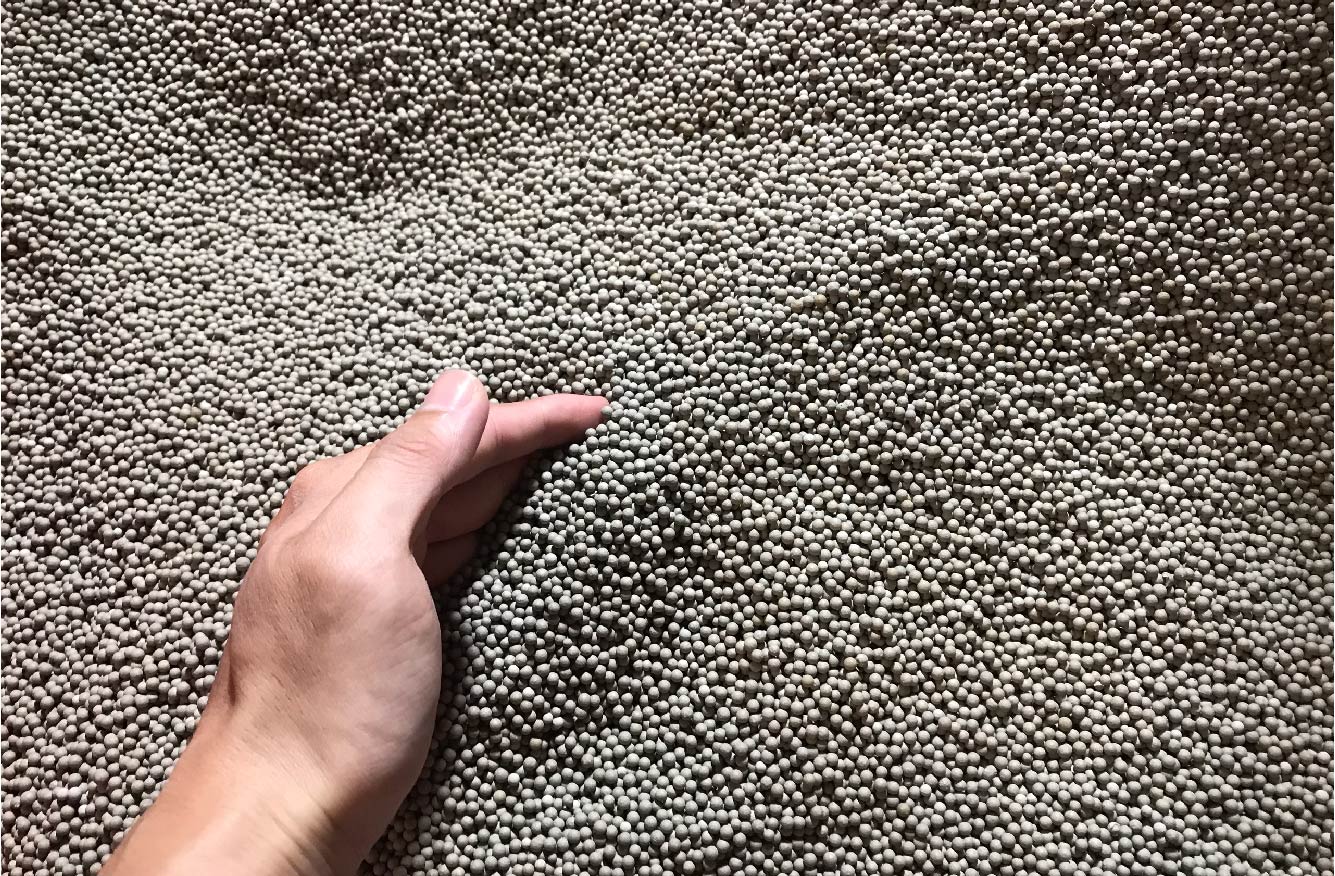
Clay desiccant is an industrial moisture-control material manufactured from bentonite clay, whose primary active component is montmorillonite — a phyllosilicate mineral of the smectite group with the approximate formula (Na,Ca)₀.₃₃(Al,Mg)₂(Si₄O₁₀)(OH)₂·nH₂O. Raw ore is mined, refined and kiln-dried to a residual moisture content below 1.5% before being packed into finished desiccant sachets.
Structurally, clay is a layered aluminosilicate in which octahedral alumina sheets are sandwiched between two tetrahedral silica sheets, forming the so-called 2:1 layer unit. The interlayer space, referred to as d-spacing (typically 9.6 Å when dry), expands to 15.4 Å upon absorption of a single water monolayer and up to 18.0 Å with two monolayers. This expansion is entirely physical and fully reversible upon heat treatment. The Cation Exchange Capacity (CEC) of montmorillonite reaches 80–120 meq/100g, providing strong electrostatic attraction for polar water molecules.
In Vietnam, clay desiccant is sourced from China, Turkey or domestic bentonite deposits in Binh Thuan and Lam Dong provinces. CEMACOSG imports industrial-grade clay raw material, controls quality under ISO 9001, and supplies B2B export customers. Browse the full catalogue on our Clay Desiccant product page.
How Clay Absorbs Moisture
Unlike silica gel, which relies primarily on capillary condensation, clay desiccant operates through three combined mechanisms: external surface adsorption, interlayer intercalation, and coordination bonding with exchangeable cations located in the interlayer space.
Interlayer intercalation is the most distinctive mechanism. As relative humidity rises, water molecules penetrate the space between montmorillonite layers, expanding the d-spacing from 9.6 Å (dry state) to 15.4 Å (one water monolayer) or 18.0 Å (two water monolayers). Because no new chemical bonds are formed, the process is entirely reversible — regeneration by heating at 110–120°C for two hours restores the original dry-state structure and capacity.
Clay's BET surface area of 50–150 m²/g is lower than silica gel's 600–800 m²/g; however, total practical moisture uptake still reaches 30–35% by weight at RH 80%, thanks to the large contribution from interlayer space. The effective RH working range for clay is 30–80%, well-matched to real-world ocean container conditions. For environments requiring RH below 30% — such as precision electronics — silica gel outperforms clay due to its higher external surface area. For a comprehensive three-way comparison, see our article on Silica Gel, Clay and CaCl₂ — Full Comparison.
Clay vs. Silica Gel: Side-by-Side Comparison
The table below summarises five critical criteria that procurement teams typically use to select between clay and silica gel for a given application.
| Criterion | Clay (Bentonite) | Silica Gel |
|---|---|---|
| Relative cost | 30–50% lower | Higher |
| Moisture uptake capacity (RH 80%) | 30–35% by weight | 35–40% by weight |
| Regenerable? | Yes — 110–120°C / 2 h | Yes — 100–150°C / 1–2 h |
| Environmental profile | Natural mineral, safe disposal | Synthetic, safe disposal |
| Food-grade approved | Yes (FDA 21 CFR 182.2727) | Yes (FDA 21 CFR 184.1711) |
At RH 30–80% (typical ocean container range), clay and silica gel deliver broadly equivalent performance. The clearest difference appears at the extremes: silica gel is superior below RH 30%, while clay maintains more stable uptake above RH 80% due to its interlayer mechanism. For a deeper analysis, read our dedicated comparison article Silica Gel vs Clay and the container-specific comparison Silica Gel vs Clay vs CaCl₂ for Containers.
Three Key Industry Applications
1. Timber and Wood Products for Export
Sawn timber, MDF boards, finger-jointed panels and wood furniture are among the most moisture-sensitive cargo categories. When container RH exceeds 70%, wood absorbs moisture, causing warping, mould growth and surface staining — losses on a single 40-foot container load can reach USD 10,000–20,000. Clay is the preferred solution for the wood industry because of its low unit cost, the large quantities required per container (8–16 kg per 40-foot container depending on voyage length), and its stable adsorption performance at RH 50–80%.
Wood exporters typically use 500g or 1,000g clay hanging bags placed alongside cargo units or suspended from container wall hooks. Detailed placement guidelines are available on our wood industry application page and in the article Desiccant Bags for Wood Exports.
2. Garments and Textile Products
Clothing, rolled fabric and finished textiles are highly susceptible to mould, yellowing and musty odour during long ocean voyages through tropical and sub-tropical zones. Clay sachets placed inside garment polybags, cartons or hung inside containers help maintain RH below 60%, effectively preventing fungal growth throughout the transit period.
Clay is particularly well-suited for garment cargo because it contains no cobalt chloride indicator, releases no chemical dust and will not stain fabrics if a sachet develops a minor tear — an important advantage for high-value textile products destined for EU or Japanese markets. Learn more on our garment industry application page and in the article Desiccant for Garment Exports.
3. Ocean Container Shipping
Container rain — condensation forming on the inner walls and ceiling of a container, then dripping onto cargo — is one of the most common causes of moisture damage in international logistics. Temperature differentials between day and night, and between tropical and temperate climate zones, drive container RH from as low as 40% to as high as 95%, posing particular risk on voyages lasting 30–60 days.
Clay hanging bags (500g–1,000g with hook) represent the most economical approach to bulk container humidity control, and are frequently combined with silica gel sachets placed directly alongside sensitive individual items. For a full explanation of the container rain phenomenon and how to calculate desiccant quantities, read the complete guide Container Rain — The Complete Anti-Condensation Handbook. Our container application page lists all available solutions by load type and voyage route.
Regulatory Compliance and Safety
Bentonite clay (montmorillonite) is recognised by the US Food and Drug Administration as Generally Recognized As Safe (GRAS) under 21 CFR 182.2727 when used for its intended purpose. This designation means food-grade clay desiccant may come into indirect contact with foodstuffs, provided primary packaging of the food product remains intact.
Under European chemical regulations, bentonite clay complies with REACH (EC 1907/2006) and is absent from ECHA's SVHC (Substances of Very High Concern) candidate list. It contains no cobalt chloride, which is severely restricted in EU markets under Regulation (EC) No 552/2009. This is a significant compliance advantage over blue-indicator silica gel for shipments destined for the European Union or the United Kingdom.
CEMACOSG provides complete MSDS (Material Safety Data Sheet) and TDS (Technical Data Sheet) documentation for all clay products. Download at MSDS Clay 2025 and Clay TDS 2025. ISO 9001 and HACCP certificates are available on our certifications page. A consolidated export compliance handbook covering all desiccant types is available at MSDS Handbook for Desiccant Exports. The complete Silica Gel guide is also a useful companion read: Silica Gel — The Complete Guide.
5 Clay SKUs from CEMACOSG
CEMACOSG currently offers five clay desiccant SKUs covering requirements from sample orders through to large-volume industrial supply. All products are manufactured under ISO 9001, carry full MSDS documentation and are delivered nationwide across Vietnam.
- Clay Montmorillonite 30g — Kraft Paper — Small electronics, accessories, sample shipments
- Clay 50g — Tyvek Paper with Logo (Blue) — Most popular; suitable for cartons under 10 kg
- Clay 100g — Non-Woven Fabric (Blue) — Large cartons, small timber bundles
- Clay 500g — Non-Woven with Logo & Hook — Container hanging, large timber units
- Clay 1,000g 4-Sachet — Non-Woven with Logo & Hook — 40-foot containers, heavy loads, long voyages
Minimum order quantity for wholesale is 500 sachets. Volume discounts apply from 2,000 sachets per month. For an accurate quotation based on your specific order volume and custom logo printing requirements, submit a Request for Quotation or call our 24/7 hotline at 0983 929 232.
Materials science references: USGS — Smectite Group Clay Minerals (Montmorillonite) · EFSA Scientific Opinion on Bentonite as Feed Additive.
Request a Clay Desiccant Quote Today
CEMACOSG provides free consultation on desiccant quantities based on your shipping route and cargo type. Submit a request and receive a detailed quotation within two business hours.
Request Clay Quotation | Hotline: 0983 929 232
Need a quote based on this article?
The CEMACOSG technical team provides free consultation on desiccant quantity tailored to your cargo, route, and export requirements.